
Gear Worth Carrying: Packing Essentials That Solve Real Travel Problems

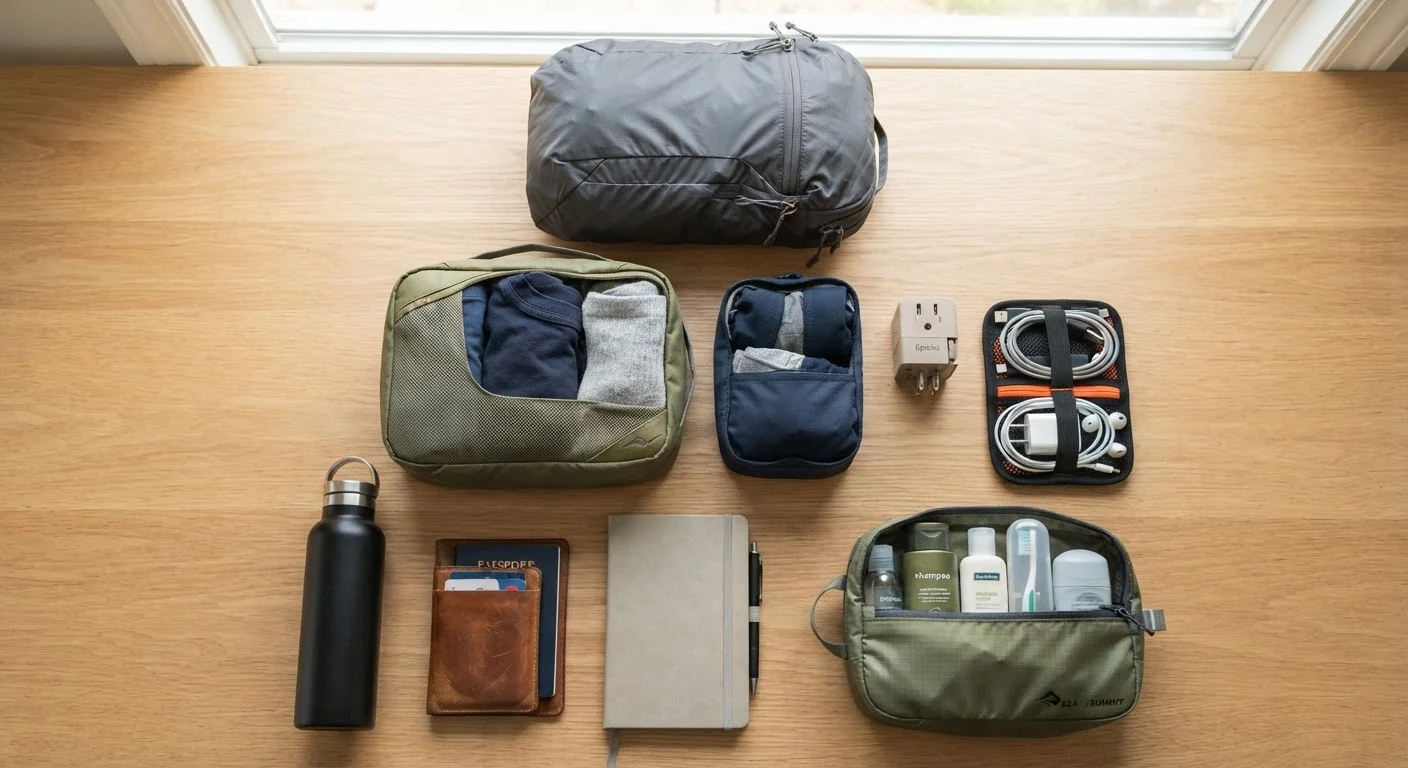
Photo: BridgeWish.com | Reliable Source Of Information editorial
Key Takeaways
- The right travel gear addresses specific friction points rather than adding bulk to your bag.
- Packing cubes, compression bags, and a universal adapter are among the most problem-solving items travelers rely on.
- Choosing gear that serves multiple functions helps reduce total pack weight without sacrificing comfort.
- Understanding why each item earns its place helps you pack with confidence and avoid over-buying gear.
Why the Right Gear Matters More Than More Gear
The travel gear market is enormous, and it's easy to come home from a gear-shopping session with a bag full of solutions to problems you've never actually had. The smarter approach: identify the friction points that genuinely slowed you down or stressed you out on past trips, then find the specific item that addresses each one.
That's the logic behind this list. Each piece of gear here earns its place by solving a concrete, recurring travel problem — not by being clever or novel. Whether you're packing for your first longer trip or refining a system you've used for years, the goal is the same: less friction, more confidence, lighter load.
Gear Is a Starting Point, Not the Whole Answer
7 Pieces of Gear That Consistently Earn Their Place
Packing Cubes: Structure for an Otherwise Chaotic Bag
Packing cubes are fabric organizers that divide your main bag into dedicated zones — one for tops, one for bottoms, one for underwear and socks. The real payoff isn't compression (though some cubes do compress); it's instant access. You pull out one cube instead of unpacking your entire bag at every hotel stop.
They also make repacking at checkout dramatically faster, which matters more than most travelers expect until the third city of a trip. Lightweight mesh cubes add minimal weight of their own, making them a net positive in almost any packing system.
Packing cubes turn a chaotic bag into a system you can navigate in seconds.
A Universal Power Adapter That Handles Multiple Plug Types
Plug standards vary significantly across regions — the US uses Type A, much of Europe uses Type C or F, the UK uses Type G, and so on. A universal adapter with built-in USB ports consolidates charging for an entire trip without requiring country-specific adapters for each destination.
Look for one that's compact and includes surge protection where possible. The problem this solves is concrete: without it, you may arrive at your destination unable to charge your phone, camera, or laptop until you locate a local hardware store.
One compact universal adapter eliminates a problem that can derail your first night abroad.
A Lightweight Daypack That Compresses to Almost Nothing
A packable daypack — one that folds into its own pouch to roughly the size of a softball — solves the persistent problem of needing a second bag once you've arrived. Whether you're heading to a beach, a day hike, or a market, you suddenly need somewhere to carry sunscreen, water, and a jacket without lugging your full luggage.
These packs typically weigh under half a pound and take up minimal room in your main bag. For travelers who want to understand the one-bag approach, a packable daypack is often the missing piece that makes it work practically.
A packable daypack weighing under half a pound gives you a full second bag on arrival days.
A Cable and Cord Organizer That Prevents Tech Chaos
Most travelers arrive at their destination with a tangled mess of charging cables, earbuds, and adapters shaken loose across their bag. A small zippered organizer with elastic loops or mesh pockets keeps every cable in a designated slot, so nothing goes missing and nothing damages anything else.
The organizational benefit extends beyond frustration — a proper cord organizer also protects cable ends from bending stress, which is one of the most common causes of cable failure during travel. For a deeper look at accessories in this category, travel gear organizers explained covers the full range of options.
A cord organizer doesn't just save frustration — it extends the life of your cables.
A Reusable Toiletry Bag With TSA-Compliant Bottles
The quart-sized bag rule for carry-on liquids is well-known, but many travelers still scramble at security or check a bag solely to bring full-size toiletries. A dedicated, clear toiletry bag paired with refillable 3-oz bottles — filled with your preferred products before departure — resolves both problems at once.
Silicone refillable bottles are leak-resistant and durable, making them more reliable than repurposed travel bottles. Labeling each bottle prevents the wrong product from ending up in your hair. This setup also makes it easier to pack light across multi-week trips because you're not buying duplicates at every destination.
Refillable silicone bottles eliminate the main reason travelers check a bag unnecessarily.
A Slim RFID-Blocking Wallet That Travels Flat
Bulky wallets create two problems on the road: they're uncomfortable in pants pockets while walking for hours, and traditional magnetic strips and RFID chips can theoretically be skimmed in crowded transit environments. A slim travel wallet with RFID-blocking material addresses both.
Pare your wallet down to an ID, one or two payment cards, and a small amount of local cash before departure. Anything else — loyalty cards, receipts, library cards — stays home. The lighter load reduces pocket bulk and lowers the stakes considerably if your wallet is ever misplaced.
Slimming your wallet before travel solves discomfort, reduces bulk, and lowers the cost of losing it.
A Packable Rain Layer That Actually Fits in a Pocket
Weather changes without warning, and a soaked traveler is a miserable one. A packable rain jacket — not a flimsy poncho, but a proper rain layer with taped seams and a hood — folds into its own chest pocket and takes up roughly the space of a paperback book in your bag.
This is one of the highest-value pieces of gear for any trip type, from city tourism to outdoor exploration. For guidance on building a travel clothing system around layers like this, building a travel wardrobe for any destination offers a practical framework.
A packable rain jacket the size of a paperback removes weather as a variable in your trip.
Test Your Gear Before You Leave Home
Build a System, Not Just a Collection
The most effective packing lists aren't built item by item — they're built around how things work together. Packing cubes become more powerful when paired with a wardrobe strategy. A universal adapter matters less if you're already carrying too many devices. A packable daypack shines brightest when your main bag is already lean enough to leave at the hotel.
If you're thinking about how these pieces fit into a larger philosophy, packing smart for every trip type walks through gear logic for four distinct travel styles. And if maximizing a smaller bag is your goal, packing a personal item strategically is worth a read before your next flight.
Every item you carry should answer a clear question: what problem does this solve? When the answer is satisfying, it earns its spot. When it isn't, it stays home.
The content on this site is for informational purposes only and is not a substitute for professional advice. Always consult a qualified professional for guidance specific to your situation.