
Packing for Every Trip Type: Business, Beach, Hiking, and City Travel

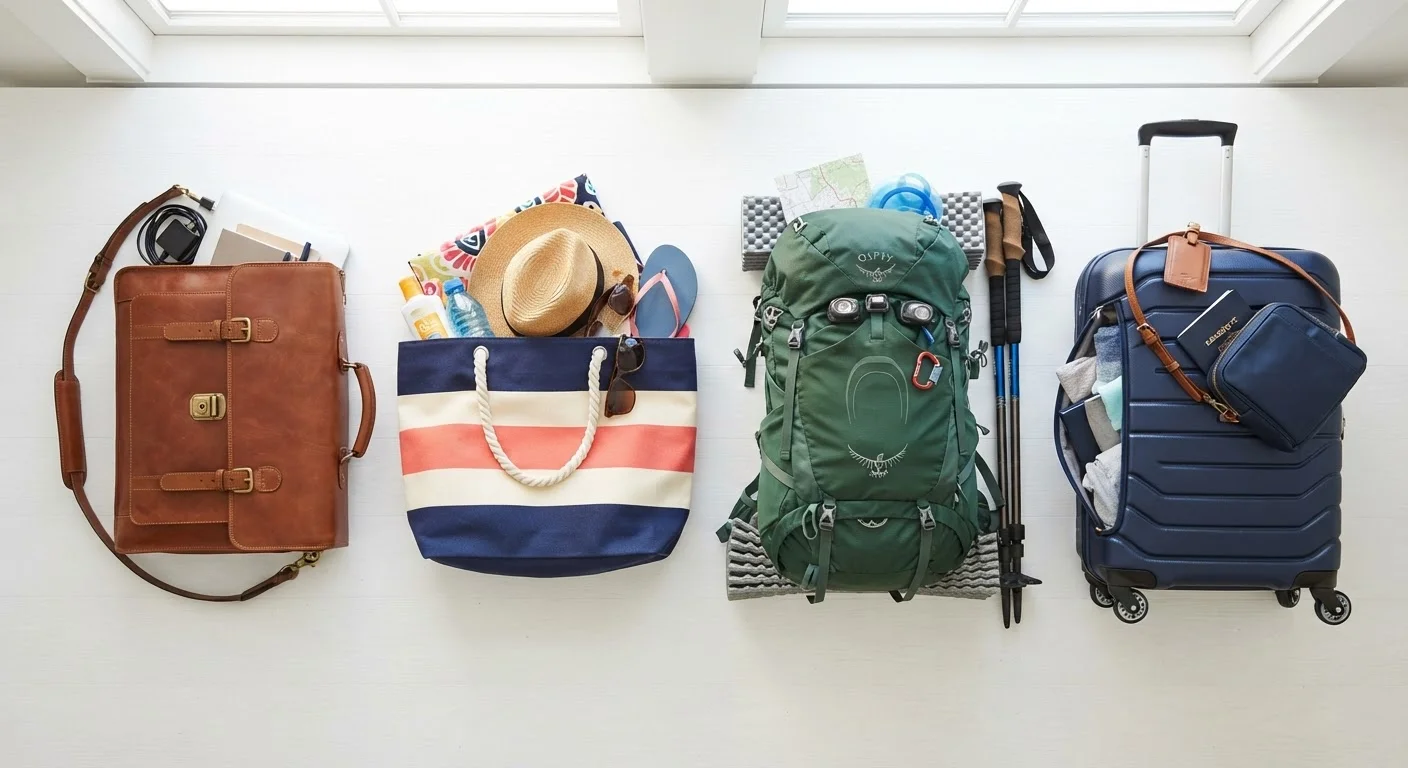
Photo: BridgeWish.com | Reliable Source Of Information editorial
Key Takeaways
- Each trip type — business, beach, hiking, city — has a distinct gear logic that should drive your packing decisions.
- Versatile, mix-and-match clothing reduces total items carried without limiting outfit options.
- Organizing tools like packing cubes make a meaningful difference in how efficiently space gets used.
- Carry-on packing is achievable for most trip types when clothing choices are deliberate.
- Checking weather, activities, and cultural expectations before packing prevents overpacking and undershooting.
Why Trip Type Changes Everything
Most packing frustration comes from applying the same logic to every trip. Tossing a hiking boot next to a blazer, or stuffing a sun hat alongside a laptop, signals that the packing hasn't been tailored — it's just been done. The result is a bag that's too heavy, poorly balanced, and full of things you won't use.
Smart packing starts with a clear picture of what the trip actually demands. The complete guide to packing for any type of trip covers this from a broad angle, but this guide goes deeper on four of the most common travel styles: business, beach, hiking, and city. Each one has a different priority — and once you see the logic behind each, packing becomes considerably less stressful.
~50%
Travelers who report overpacking regularly
Surveys by travel industry researchers consistently find roughly half of travelers bring more than they use on any given trip.
1 in 3
Checked bags that cause missed connections or delays
Travel analysts note that checked baggage handling is among the leading sources of trip disruption, particularly on multi-leg itineraries.
Packing for Business Travel
Business packing is about looking sharp while staying mobile. Most professionals are working with tight schedules and limited luggage allowances, which means every item needs to justify its weight in both function and appearance.
- Bag choice: A structured carry-on or hybrid backpack with a dedicated laptop compartment keeps professional gear organized and wrinkle-free.
- Clothing strategy: Build around one or two neutral suits or blazers and rotate shirts or blouses. Wrinkle-resistant fabrics are worth seeking out. A travel wardrobe built for versatility will serve you well here.
- Tech essentials: Chargers, a universal adapter, and a portable battery are non-negotiable. Keep these in a dedicated pouch so security checks move quickly.
- Shoes: One pair of polished dress shoes plus one comfortable walking shoe covers most itineraries without overtaxing your bag.
Roll clothes instead of folding them for carry-on business trips — it reduces wrinkles in casual pieces and frees up surprising amounts of space for structured items like blazers.
Pack your beach bag the night before departure and let everything dry fully — damp swimwear sealed in a bag for hours creates mildew problems that are hard to fix mid-trip.
The goal is to fit everything into carry-on size. Checking a bag costs time, and time is the one thing business travel tends to squeeze hardest.
Packing for a Beach Trip
Beach packing looks easy on paper — shorts, sunscreen, sandals — but it tends to balloon quickly with bulky items that don't compress well. The key is editing ruthlessly and choosing dual-purpose items.
- Swimwear: Two suits allow one to dry while you wear the other. Quick-dry fabrics help enormously.
- Cover-ups and layers: A lightweight linen shirt or sarong serves as beach cover-up, restaurant layer, and sun protection in one item.
- Footwear: Sandals that work both on the beach and at a casual dinner eliminate the need for a second pair.
- Toiletries: Reef-safe sunscreen in solid or concentrated form takes up less space. Decant products into reusable travel-size containers.
- Bag within a bag: A packable tote or mesh bag for beach days keeps sand out of your main luggage.
Double Up on Beach Bag Duties
Compared to other trip types, beach travel allows the most relaxed clothing approach — but wet and sandy gear creates organization problems if you don't plan for them upfront.
Packing for Hiking and Outdoor Adventures
Hiking packing is the most technical of the four. Every ounce matters on trail, and the wrong gear choice can make a trip uncomfortable or genuinely unsafe. Comfort, safety, and performance take priority over style.
- Layering system: A moisture-wicking base layer, insulating mid-layer, and waterproof shell covers most conditions. This system is flexible and compresses well.
- Footwear: Trail shoes or boots appropriate to the terrain are non-negotiable. Break them in before departure — blisters on day one are avoidable.
- Safety and navigation: A basic first aid kit, map or downloaded offline navigation, and a reliable flashlight or headlamp belong in every outdoor pack.
- Hydration and nutrition: A reusable water bottle or filtration system reduces dependence on packaged water and cuts waste on longer trails.
For destinations with extreme conditions, packing for cold, humid, and high-altitude environments requires additional planning beyond a standard hiking list.
Verify Trail Conditions Before You Pack
Packing for City Travel
City travel is the most flexible packing scenario, but it carries its own traps: overpacking for evenings out, underestimating walking distances, and misjudging the gap between casual and smart-casual expectations.
- Footwear first: Comfortable walking shoes that look reasonably put-together handle 90% of city situations. A packable pair of flats or loafers handles nicer evenings without adding bulk.
- Clothing: Neutral-toned pieces that mix and layer give you more outfit combinations from fewer items. Building a versatile travel wardrobe explains this approach in detail.
- Day bag: A small crossbody or anti-theft daypack keeps essentials accessible during long walking days without straining your back.
- Scarf or light jacket: Air-conditioned museums, restaurants, and transit can be cold even in warm cities — a packable layer earns its place every time.
Frequent travelers approach city packing with a bias toward less: they know the city itself provides most of what you need.
Universal Rules That Apply to Every Trip
Regardless of destination type, a handful of principles apply consistently and will improve any packing approach.
- Start with a list, not the bag. Write down every activity and occasion before touching a single item of clothing.
- Use organizers. Packing cubes, compression bags, and folder inserts each serve a distinct purpose — understanding the difference helps you choose what's actually useful for your trip style.
- Edit once, then edit again. After packing, remove at least two items. Most travelers find they use far less than they brought.
- Check weight before you leave. Many airlines have strict carry-on weight limits in addition to size limits — a luggage scale at home saves stress at the airport.
For longer journeys where a single approach won't cover the full itinerary, packing light across multi-week travel offers strategies tailored to sustained travel rather than short trips. And for gear that genuinely solves problems rather than just filling space, travel essentials worth carrying is a solid next read.
Packing Needs Shift as Trips Overlap
The content on this site is for informational purposes only and is not a substitute for professional advice. Always consult a qualified professional for guidance specific to your situation.