
Packing Cubes, Compression Bags, and Folder Inserts: What Each One Actually Does

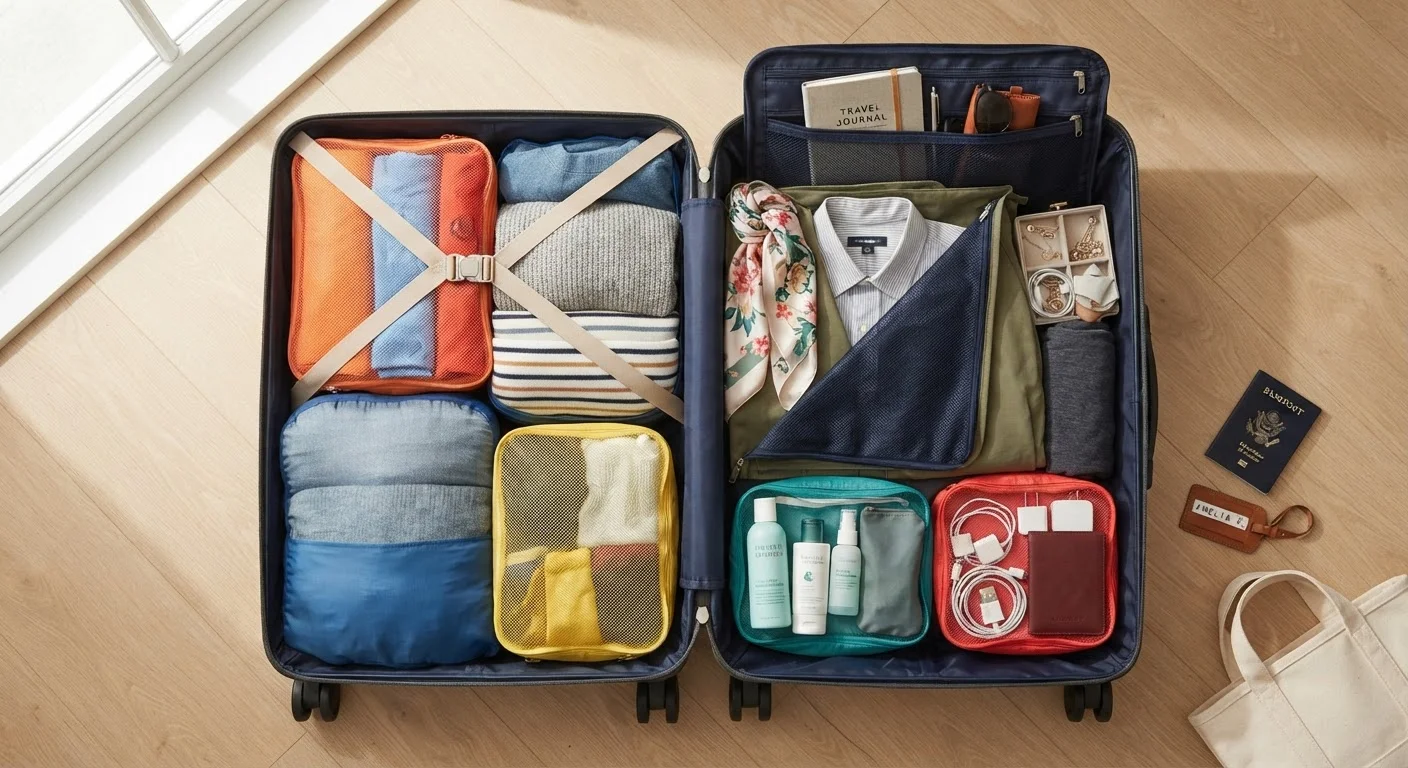
Photo: BridgeWish.com | Reliable Source Of Information editorial
The Short Answer: They Solve Different Problems
Walk into any travel store and you'll find shelves stacked with packing cubes, compression bags, and folder inserts — often side by side, often looking deceptively similar. But each one is designed to solve a distinct packing challenge, and mixing them up means bringing the wrong tool for the job.
| Primary purpose of packing cubes | Organization and compartmentalization |
| Primary purpose of compression bags | Volume reduction for bulky items |
| Primary purpose of folder inserts | Wrinkle prevention for structured garments |
| Do compression bags reduce weight? | No — only volume |
| Best garments for folder inserts | Dress shirts, blazers, tailored trousers |
| Best items for compression bags | Sweaters, fleeces, down jackets |
At a high level: packing cubes organize your clothes into findable zones, compression bags reduce volume by squeezing out air, and folder inserts protect structure by keeping folded garments crisp. Understanding that distinction is the starting point for packing smarter on any trip — whether you're carry-on only or checking a bag. See our guide to packing for different trip types for how these organizers fit different travel styles.
Packing Cubes: Organization, Not Compression
Packing cubes are zippered fabric containers — usually rectangular and made from lightweight mesh or nylon — that you fill with clothes and then slot into your bag like drawers. Their job is not to shrink your stuff; it's to compartmentalize it so you're not digging to the bottom of your suitcase every time you need a fresh shirt.
A common setup is one cube per clothing category: tops in one, bottoms in another, workout gear in a third. When you arrive at a hotel, the cubes drop straight into the dresser or stay in the bag, and you always know where things are.
Packing cubes work with either rolled or folded clothes. Rolling vs. folding each has its merits, and cubes accommodate both. For a deeper look at whether cubes are genuinely worth carrying, see our article on how packing cubes actually work.
Packing cube
A zippered fabric container used to group and organize clothing inside a bag. Cubes don't compress items — they segment them so they're easier to find and access.
Compression bag
A sealable bag designed to squeeze air out of bulky items, reducing the space they occupy. Travel versions use a roll-and-press mechanism rather than a vacuum pump.
Folder insert
A flat, often semi-rigid organizer that holds folded structured garments — like dress shirts or trousers — in place to minimize wrinkles during transit.
One-way valve
A small valve on compression bags that allows air to exit but not re-enter, keeping the bag compressed after sealing. Common in travel-specific compression bags.
Compression Bags: Making Less Space Hold More
Compression bags — sometimes called space bags — work by removing air from around your clothes, which can meaningfully reduce the volume of bulky items like sweaters, fleeces, and down jackets. Travel versions don't require a vacuum; you roll or press them to force air out through a one-way valve.
50%
Volume reduction possible with compression bags
Compression bags can reduce the packed volume of bulky items like down jackets by roughly half, though results vary by garment type and bag design.
3–5
Packing cubes typical for a week-long trip
Most travelers use three to five cubes to cover major clothing categories for a week-long trip, though the right number depends on bag size and wardrobe.
The trade-off: compression doesn't reduce weight, and it can wrinkle delicate fabrics badly. These bags shine for cold-weather trips where a single puffy jacket might otherwise eat a third of your suitcase. They're less useful for light cotton wardrobes or business clothes that need to arrive looking sharp.
It's also worth noting that not all compression bags behave the same way under cabin pressure. Some may expand slightly mid-flight, so check the product's design before assuming it'll hold its shape throughout a flight.
Folder Inserts: The Wrinkle-Fighter
Folder inserts — also called packing folders or shirt folders — are rigid or semi-rigid flat organizers that sandwich folded dress shirts, trousers, blazers, or blouses inside a protective shell. When you open one at your destination, the clothes inside typically show far fewer creases than they would after a standard folded trip inside a bare suitcase.
They're almost exclusively designed for structured garments that don't respond well to rolling: button-down dress shirts, suit trousers, tailored blouses. If your wardrobe for a trip is all casualwear, a folder insert may not be worth the extra rigid bulk it adds to your bag.
Business travelers and anyone attending formal events mid-trip tend to find folder inserts genuinely useful. If you're curious how your choice of luggage affects how well a folder insert fits, that's worth thinking through before you buy one.
Which One (or Combination) Fits Your Trip?
Most travelers end up using more than one type. A practical combination for a week-long trip might be: a folder insert for dress clothes, one or two packing cubes for casual layers, and a compression bag for a bulky jacket. Each layer does its own job without duplicating another's.
If you're packing into a personal item — a tote or underseat bag — smaller cubes or a single compression bag can make the difference between fitting everything and checking a bag. Our guide to maximizing your personal item has practical strategies for that scenario.
The broader point: organizers are tools, not magic. Choosing the right one means matching the tool to the actual problem — too much clutter, too much volume, or too many wrinkles. For a wider look at travel accessories that genuinely earn their place in your bag, visit our travel gear explainer, or start with our trip planning hub if you're building your packing strategy from scratch.
The content on this site is for informational purposes only and is not a substitute for professional advice. Always consult a qualified professional for guidance specific to your situation.