
Packing Cubes: What They Are, How They Work, and Whether They're Worth It

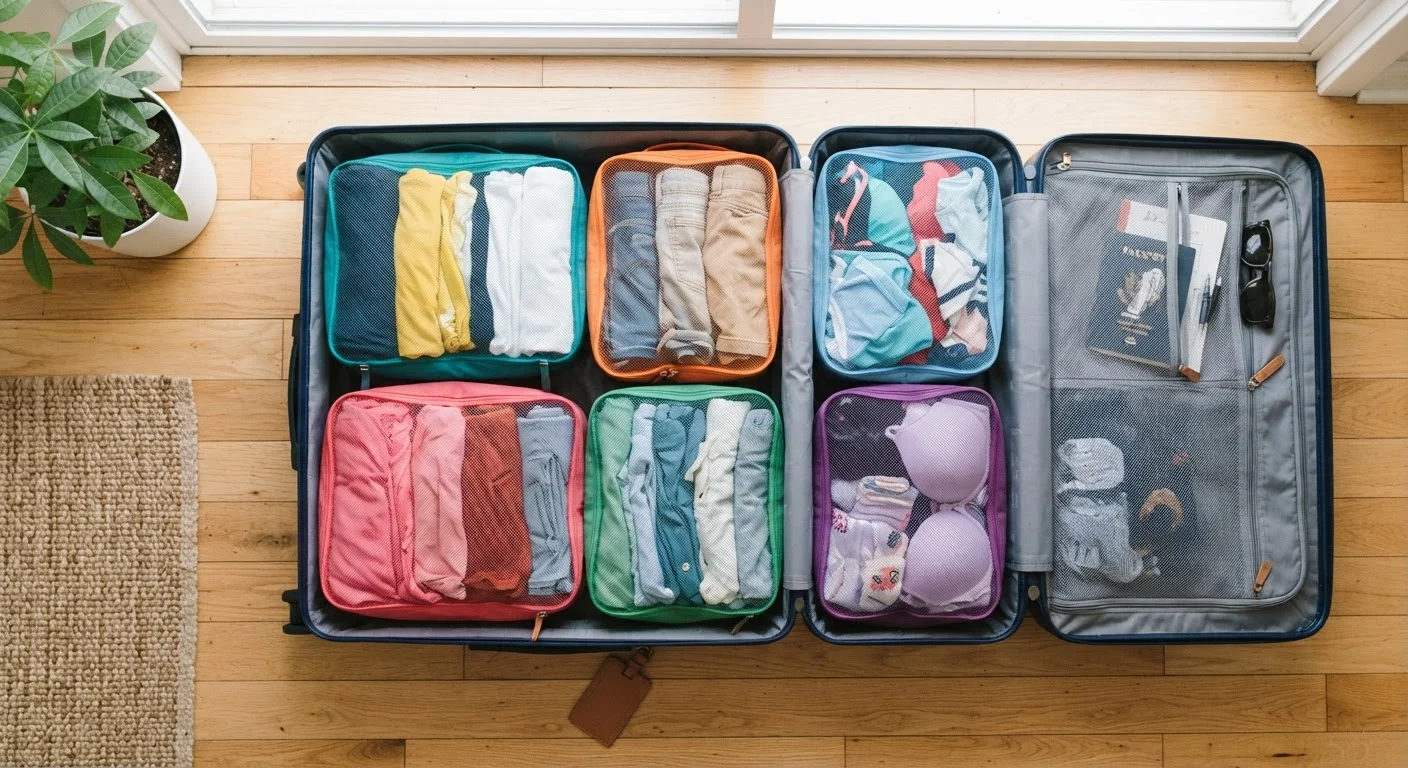
Photo: BridgeWish.com | Reliable Source Of Information editorial
Key Takeaways
- Packing cubes organize clothes into zones inside a bag, making items easier to find and access.
- They don't meaningfully compress clothing or create extra space in most cases.
- Frequent travelers and multi-destination trips benefit most from packing cubes.
- Light, minimalist packers may find cubes add unnecessary bulk and weight.
- Compression packing cubes are a different product and do work differently.
Keeps clothing categories separated and easy to locate
No more digging through a tangled suitcase — each cube holds one category, so finding a clean shirt at the end of a long travel day takes seconds, not minutes.
Speeds up repacking between destinations
On multi-stop trips, reassembling your bag is as simple as dropping each cube back into the suitcase in the same configuration, rather than re-sorting loose items.
Reduces mid-trip wardrobe chaos
Clothes stay folded or rolled inside the cube rather than migrating around the bag, which means less wrinkling and a tidier overall packing system throughout the trip.
Simplifies bag-sharing with a travel partner
Assigning cubes to each person creates clear ownership zones inside a shared suitcase, reducing the frustration of items getting mixed together.
Makes hotel check-ins faster and less disruptive
Cubes can slide directly into dresser drawers or sit neatly on a shelf, letting you settle into a room quickly without fully unpacking.
Standard cubes don't create extra suitcase space
Despite common marketing claims, regular packing cubes don't compress clothes or add capacity — they simply organize the space you already have, and may slightly reduce it due to the cube fabric itself.
Add weight to your overall luggage
A full set of packing cubes can add several ounces to a few pounds depending on the materials, which matters most for carry-on travelers watching airline weight limits.
Can feel unnecessarily rigid for simple trips
For a two-night getaway with a small duffel, sorting clothes into cubes adds steps without meaningful benefit — the organization system outweighs the problem it solves.
Require an upfront learning curve to use well
Getting real value from packing cubes means building a consistent category system and packing habit; travelers who skip this step often find the cubes unused after the first trip.
What Packing Cubes Actually Are
Packing cubes are lightweight, zippered fabric compartments — typically rectangular — designed to sit inside your luggage and group your clothing or gear into dedicated zones. Think of them as dresser drawers that travel with you. A typical set includes a few cubes in different sizes: a larger one for bulkier items like pants and sweaters, and smaller ones for socks, underwear, or accessories.
They're made from nylon or polyester mesh, which keeps them light and lets you see the contents at a glance. Most are reusable, washable, and available in various colors — a feature that makes it easy to color-code categories (tops in blue, bottoms in green, for example).
Standard packing cubes do not compress clothing. That's a common misconception worth clearing up early. If you want compression, look for compression packing cubes, which have a secondary zip that squeezes air out. These are a distinct product and work quite differently — see our breakdown in packing cubes vs. compression bags vs. folder inserts for a full comparison.
How Packing Cubes Work in Practice
The practical value of packing cubes is organizational, not spatial. Instead of loose clothes shifting around your suitcase, each cube holds a category of items in place. When you arrive at a hotel, you can lift a cube directly into a drawer — or simply leave everything in the cubes and work from your open bag without unpacking at all.
They also make repacking dramatically faster. On a multi-city trip, grabbing one cube per category and reassembling your suitcase takes minutes rather than the usual scattered scramble. They're especially helpful when you're sharing a bag with a travel partner — each person gets their own cube territory.
~3–5 min
Estimated repacking time with a cube system
Experienced cube users commonly report that reassembling a suitcase between destinations takes just a few minutes when a consistent cube system is in place.
4–8 oz
Typical weight added by a 3-cube set
Most standard nylon packing cube sets add between four and eight ounces to your luggage, a consideration for carry-on travelers near airline weight limits.
How you fill the cubes matters too. Rolling clothes before placing them in cubes (rather than folding flat) tends to maximize how much fits. Our guide on rolling vs. folding explores which method works best depending on your clothing type and bag style.
The Pros of Using Packing Cubes
For many travelers, packing cubes genuinely change the experience of moving through a trip. Here's where they deliver real value:
Keeps clothing categories separated and easy to locate
No more digging through a tangled suitcase — each cube holds one category, so finding a clean shirt at the end of a long travel day takes seconds, not minutes.
Speeds up repacking between destinations
On multi-stop trips, reassembling your bag is as simple as dropping each cube back into the suitcase in the same configuration, rather than re-sorting loose items.
Reduces mid-trip wardrobe chaos
Clothes stay folded or rolled inside the cube rather than migrating around the bag, which means less wrinkling and a tidier overall packing system throughout the trip.
Simplifies bag-sharing with a travel partner
Assigning cubes to each person creates clear ownership zones inside a shared suitcase, reducing the frustration of items getting mixed together.
Makes hotel check-ins faster and less disruptive
Cubes can slide directly into dresser drawers or sit neatly on a shelf, letting you settle into a room quickly without fully unpacking.
Frequent travelers in particular tend to develop strong opinions about their packing setups. If you're curious how seasoned flyers approach luggage organization, our piece on how frequent travelers think about packing breaks down that mindset shift.
The Cons Worth Knowing Before You Buy
Packing cubes aren't for everyone, and understanding their limitations prevents disappointment:
Standard cubes don't create extra suitcase space
Despite common marketing claims, regular packing cubes don't compress clothes or add capacity — they simply organize the space you already have, and may slightly reduce it due to the cube fabric itself.
Add weight to your overall luggage
A full set of packing cubes can add several ounces to a few pounds depending on the materials, which matters most for carry-on travelers watching airline weight limits.
Can feel unnecessarily rigid for simple trips
For a two-night getaway with a small duffel, sorting clothes into cubes adds steps without meaningful benefit — the organization system outweighs the problem it solves.
Require an upfront learning curve to use well
Getting real value from packing cubes means building a consistent category system and packing habit; travelers who skip this step often find the cubes unused after the first trip.
Compression Cubes Are a Different Product
If you're focused on traveling as light as possible — especially for extended trips where smart editing matters more than organization systems — check out our strategies for packing light on long trips. Cubes can complement that approach, but they're not a substitute for packing fewer things overall.
When Packing Cubes Are Worth It (and When They're Not)
Packing cubes earn their place in a bag when your travel involves complexity: multiple destinations, shared luggage, long durations, or a recurring need to find specific items quickly without unpacking everything. Business travelers who live out of a carry-on multiple times a month often swear by them for exactly this reason.
They're less compelling for weekend trips with a single small bag, ultra-minimalist packers who carry only five items, or travelers who already have a tidy, intuitive packing system that works for them. A well-organized personal item — packed intentionally — can sometimes accomplish the same thing. See our guide on packing a personal item that pulls its weight for strategies that don't rely on cubes at all.
Ultimately, packing cubes are a tool. Like any tool, their value depends entirely on the job you need them to do.
The content on this site is for informational purposes only and is not a substitute for professional advice. Always consult a qualified professional for guidance specific to your situation.