
Packing Light for Long Trips: Strategies That Actually Hold Up Over Weeks

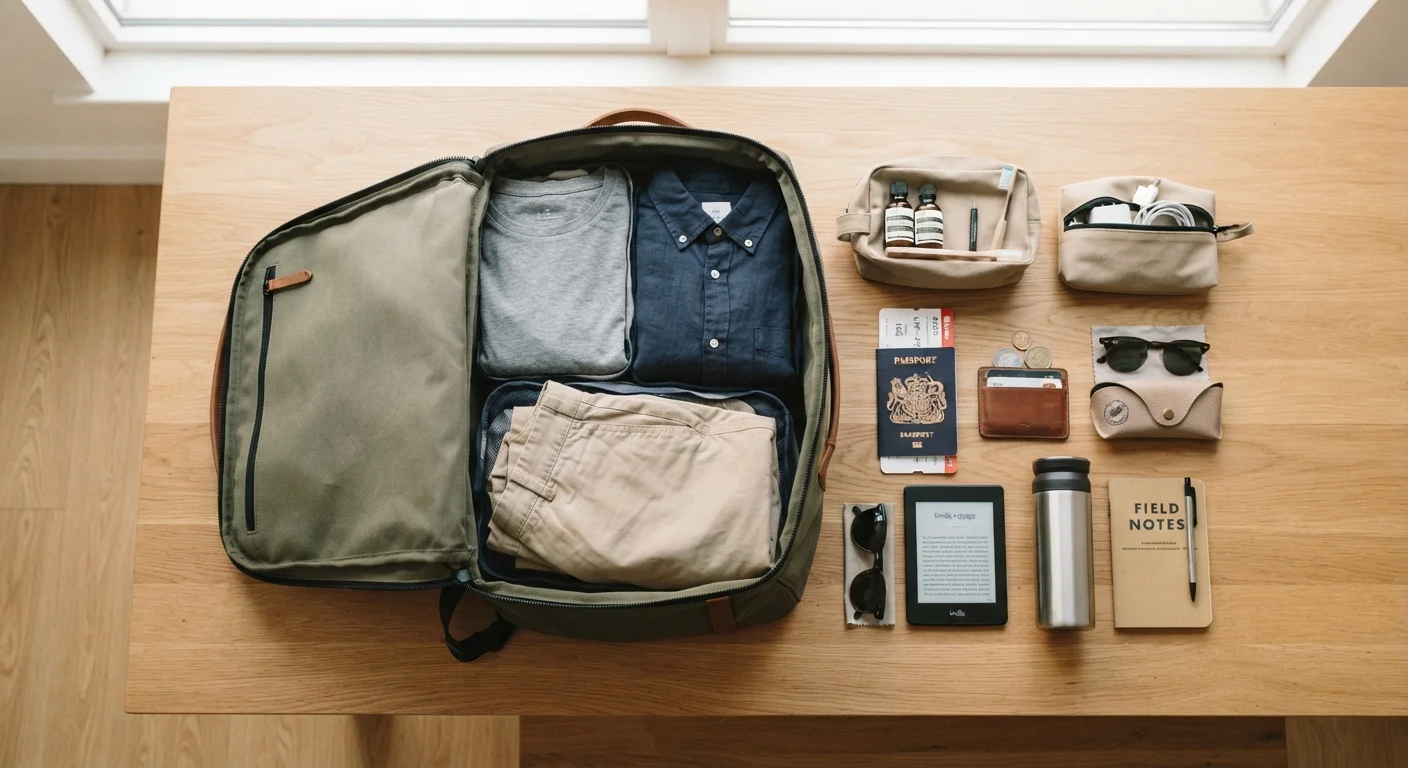
Photo: BridgeWish.com | Reliable Source Of Information editorial
Key Takeaways
- A capsule wardrobe built around neutral, mix-and-match pieces can cover weeks of travel in a single carry-on.
- Planning laundry access every 4–7 days eliminates the need to pack for every day of a long trip.
- The heaviest item in most bags is shoes — limit yourself to two or three versatile pairs.
- Decanting toiletries into small reusable containers and buying consumables locally saves significant space and weight.
- Multi-week packing demands fewer items chosen more carefully — not more items crammed in.
Why Long Trips Actually Demand Less, Not More
There's a counterintuitive truth at the heart of extended travel: the longer your trip, the lighter you should pack. A week-long vacation might invite overpacking without much consequence, but multi-week travel punishes a heavy bag at every turn — on transit days, hostel stairs, and cobblestone streets. If you want to understand the full case for going lighter, our piece on the logic behind packing light lays it out clearly.
The mental shift that changes everything: you're not packing for every possible situation. You're packing for the most likely ones — and building in flexibility for the rest. Long-trip packing is about systems, not stuff.
“The secret to traveling light is not packing less — it's packing smarter. Every item should earn its place.”
— Rick Steves, Travel author and advocate for independent, carry-on-only travel
Build a Capsule Wardrobe, Not a Full Closet
Clothing is the biggest culprit in an overpacked bag. The solution isn't to pack fewer outfits — it's to pack fewer items that create more outfits. A capsule wardrobe built around two or three neutral base colors allows pieces to mix and match across dozens of combinations.
Choose fabrics that dry quickly and resist wrinkles
Limit yourself to a maximum of seven clothing items for a multi-week trip
Wear your heaviest or bulkiest outfit on every travel day
Apply a one-in, one-out rule for any item you buy during the trip
For a deeper look at how clothing strategy shifts depending on your destination type, see our guide to packing for every trip type.
Plan Around Laundry, Not Despite It
Laundry access is the single most liberating variable in long-trip packing. When you know you can wash clothes every five to seven days, you only need to pack for that window — not for the full duration of your trip. Most accommodations — hotels, guesthouses, hostels, and vacation rentals — offer laundry facilities or nearby laundromats.
Factoring laundry into your itinerary from the start is a hallmark of experienced travelers. Our article on what smart travelers do differently covers this and other habits that keep multi-week trips running smoothly.
Tackle Shoes, Toiletries, and Tech — the Three Weight Traps
After clothing, three categories consistently blow up long-trip bags: footwear, toiletries, and electronics. Each has a simple solution.
Shoes: Limit yourself to two pairs — ideally three at most — with at least one doing double duty (e.g., walking shoes that work for a casual dinner). Wear your bulkiest pair on travel days.
Toiletries: Decant products into reusable small containers and commit to buying consumables like shampoo and sunscreen locally. This dramatically reduces both weight and the anxiety around liquid restrictions. Our guide on packing for any type of trip includes a full breakdown of toiletry strategy.
Tech: Consolidate chargers using a single multi-port adapter. Question whether each device genuinely earns its place — a tablet and a laptop rarely both need to make the trip.
The Charger Audit Trick
Maximizing every cubic inch helps too. See how packing your personal item strategically can expand your effective carry-on capacity without adding a bag.
Stay Organized From Week One to Week Four
Packing light is only half the battle — staying organized across weeks of travel keeps you from feeling like you're living out of a pile. Packing cubes are one popular tool: they segment your bag into zones so you always know where things are, even in a dim hotel room at midnight. For an honest look at whether they're worth it for your style of travel, check out our piece on packing cubes.
~22 lbs
Average weight of a checked bag for a two-week trip
Travel industry observations suggest most travelers pack roughly 20–25 pounds for multi-week trips, despite needing far less when using a planned laundry system.
5–7 days
Optimal laundry interval for long-trip packing
Planning laundry access every five to seven days means you only ever need clothing for that window — not for the entire trip duration.
Building a consistent repacking ritual — always returning items to the same spot — prevents the slow accumulation of chaos that derails long trips. Pair this with a frequent traveler's mindset and you'll arrive at week four feeling just as organized as day one.
Climate and Destination Can Change the Equation
The content on this site is for informational purposes only and is not a substitute for professional advice. Always consult a qualified professional for guidance specific to your situation.