
Rolling vs. Folding Clothes: What the Evidence Actually Suggests

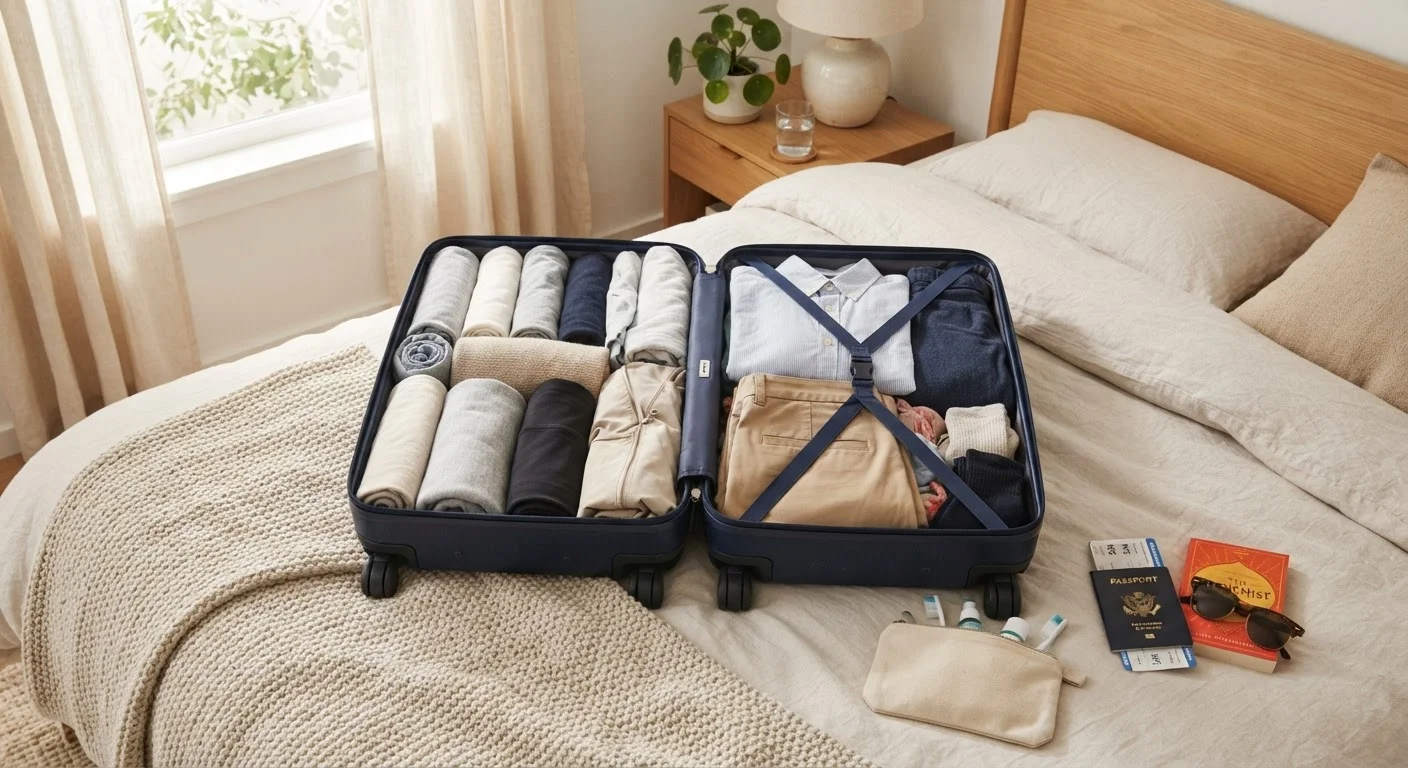
Photo: BridgeWish.com | Reliable Source Of Information editorial
Key Takeaways
- Rolling generally saves space and reduces certain wrinkles in casual fabrics like t-shirts and jeans.
- Folding is better for structured garments — blazers, dress shirts, and trousers benefit from flat, aligned folds.
- Wrinkle outcomes depend heavily on fabric type, not just the packing method you choose.
- Combining both methods — rolling casuals, folding formalwear — often works better than committing to one.
- Packing cubes can amplify the benefits of either method by keeping contents compressed and organized.
Why This Debate Actually Matters
Packing efficiency isn't just about fitting more into your bag — it's about arriving with clothes you can actually wear. The rolling-vs-folding question sits at the intersection of space, wrinkle prevention, and personal organization style. And the honest answer is: neither method is universally superior. What works depends on your bag shape, your clothing types, and your destination.
That said, there's real, observable logic behind each approach — not just internet opinion. Understanding it helps you make a deliberate choice rather than a habitual one. If you're also weighing which bag to put those clothes into, our breakdown of soft-sided vs. hard-shell luggage is worth a read before you pack.
| Criterion | Rolling | Folding |
|---|---|---|
| Space efficiency | High — compresses air well | Moderate — traps more air |
| Best fabric types | Cotton, jersey, denim, synthetics | Structured wovens, dress shirts, blazers |
| Wrinkle prevention | Good for casual fabrics | Better for structured garments |
| Visual inventory | Excellent — items visible at a glance | Moderate — items stacked, less visible |
| Suits rectangular luggage | Less so — cylinders leave gap space | Well — flat stacks align cleanly |
| Works with packing cubes | Yes — rolls compress inside cubes | Yes — flat folds fill cubes evenly |
What Rolling Does Well (and Where It Falls Short)
Rolling works by creating a tight cylinder that compresses air from clothing and stacks efficiently in rounded or irregular spaces — think duffels, backpacks, or the corners of a suitcase. It also gives you an immediate visual inventory: unroll a bag and you can see every item at a glance, which is genuinely useful when living out of a suitcase for days at a time.
For casual fabrics — cotton tees, jersey knits, athletic wear, denim — rolling tends to produce fewer deep creases than folding, because the fabric curves gradually rather than bending sharply at a fold line. This is the kernel of truth in the pro-rolling camp.
The limitation? Rolling struggles with structure. A button-down dress shirt rolled tightly will emerge with a collar that looks like it lost a fight. Blazers and trousers with sharp creases lose those creases entirely when rolled. Delicate fabrics like silk or linen can develop fine wrinkles along the roll seam that are harder to shake out than standard fold lines.
30%
Potential space saved by rolling vs. folding
Informal packing tests by luggage and travel organizations suggest rolling soft garments can free up roughly 30% more usable bag space compared to flat folding.
2–3 items
Extra garments fitting a carry-on when rolled
Travel packing educators commonly estimate that rolling casual clothes allows two to three additional items to fit in a standard carry-on versus the same items folded flat.
What Folding Does Well (and Where It Falls Short)
Folding aligns fabric along its natural seams and grain, which is why garment industry professionals — from tailors to retail staff — default to it for structured clothing. A well-folded dress shirt, stacked flat, maintains its collar shape and button placket alignment far better than a rolled one.
Folding also suits rectangular luggage geometry. Hard-shell suitcases with flat interiors are essentially designed for flat-stacked clothing. Folded clothes don't shift as much in transit, which means less post-flight chaos when you open the lid.
The downside is density. Folded clothes trap air between layers, which means they often take up more volume than rolled equivalents — a real concern if you're committed to carry-on only travel. For more on that calculus, see our guide on carry-on vs. checked bag strategies.
Fabric Matters More Than Method
The Hybrid Approach and When to Use Organizers
Most experienced packers don't choose one method — they assign each method to the right garments. Roll casual layers, athletic gear, and underwear into the base of the bag. Fold dress shirts, trousers, and blazers flat on top, ideally with a layer of tissue paper or a dry-cleaning bag between them to reduce friction-based wrinkles.
Packing cubes pair naturally with either method. Rolling into cubes compresses casual clothes into tidy, retrievable blocks. Folding into a dedicated cube keeps formalwear isolated from the rest of the bag. If you haven't explored organizers yet, our overview of packing cubes and how they work explains how they can amplify whichever method you prefer. You can also compare the full range of organizer types — cubes, compression bags, and folder inserts — in our piece on what each luggage organizer actually does.
The bottom line: the rolling-vs-folding debate is less a binary choice and more a toolkit question. Match the method to the fabric, match the organizer to the method, and you'll pack smarter on every trip — regardless of where you land on the debate.
The content on this site is for informational purposes only and is not a substitute for professional advice. Always consult a qualified professional for guidance specific to your situation.