
Carry-On vs. Checked Bag: Choosing the Right Strategy for Your Trip

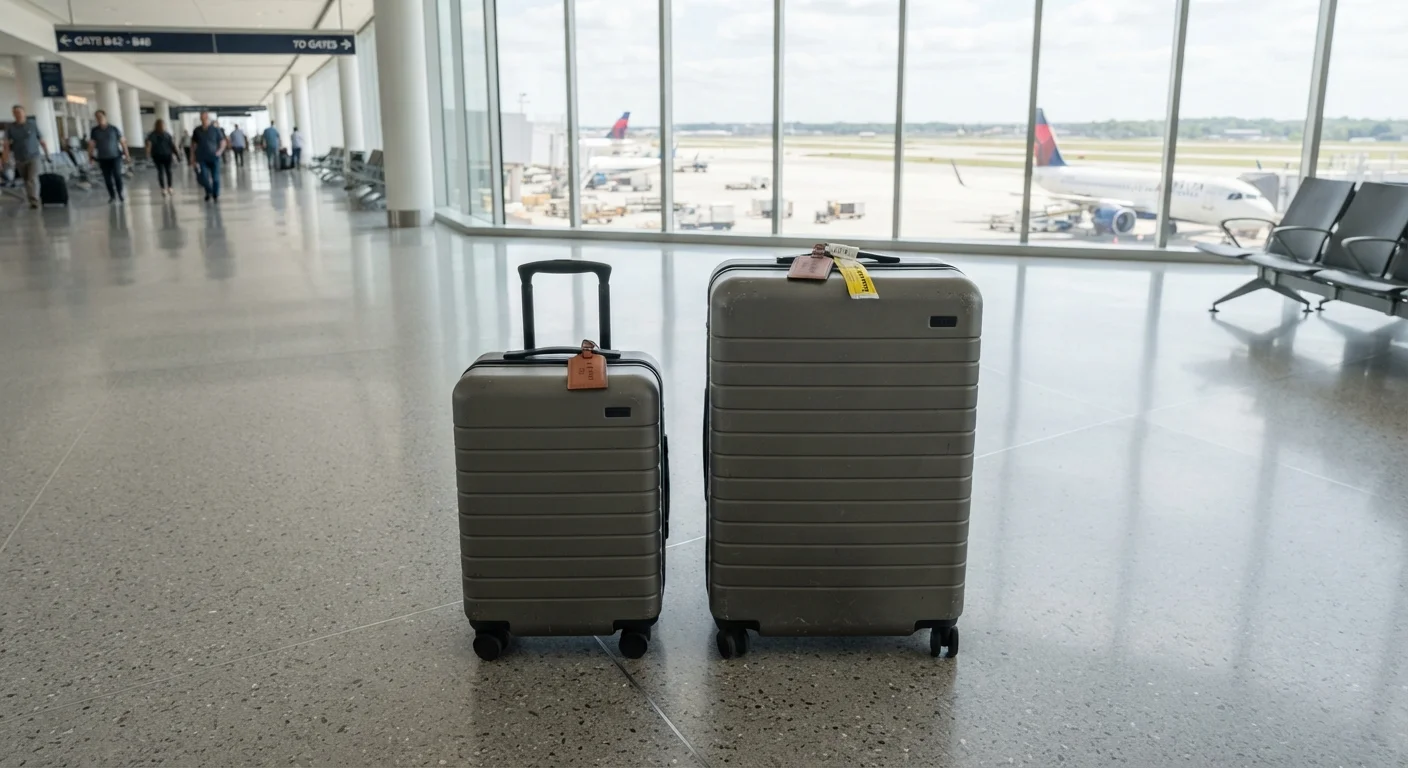
Photo: BridgeWish.com | Reliable Source Of Information editorial
Key Takeaways
- Carry-on bags save time at airports by eliminating baggage claim and reducing checked-fee costs.
- Checked bags offer significantly more packing space and fewer restrictions on liquids and sharp items.
- Airline size and weight limits vary widely — always verify before you pack.
- Trip length, destination type, and itinerary complexity should drive your luggage decision.
- Many experienced travelers use a hybrid approach: carry-on plus a personal item.
The Core Trade-Off: Speed and Control vs. Space and Convenience
Every packing decision starts with one fundamental question: do you want to move fast, or do you want to bring more? Carry-on bags put you in control — your belongings travel with you, you skip baggage claim, and you avoid the gamble of a misrouted suitcase. That freedom has real value, especially on short trips or when connecting flights are tight.
Checked bags flip the equation. You surrender your luggage at the counter and reclaim it at the carousel — but in return, you gain dramatically more packing room and far fewer restrictions. No agonizing over whether your toiletries meet the TSA's 3-1-1 liquids rule. No tetris-fitting shoes around your laptop. If the trip demands it, a checked bag simply delivers breathing room that a carry-on cannot.
Neither option is universally right. The smartest travelers match luggage strategy to the specific demands of each trip rather than defaulting to habit. For a deeper dive into building that decision-making framework, see how to decide based on your actual trip.
| Criterion | Carry-On Bag | Checked Bag |
|---|---|---|
| Typical capacity | ~40 liters / 22 x 14 x 9 in | ~60–100+ liters |
| Baggage fees | Usually free on major carriers | Typically $30–$40+ per bag, per flight |
| Liquids restriction | TSA 3-1-1 rule applies | No restriction on liquids |
| Risk of loss or delay | Travels with you — no risk | Small but real risk of misrouting |
| Airport speed | Faster — skip baggage claim | Slower — wait at carousel |
| Best trip length | Weekend to ~7 days | Week-plus or gear-heavy trips |
| Fragile item protection | Good — overhead bin controlled | Variable — handler dependent |
What Airlines Actually Allow — and Why It Varies
One underappreciated reality: carry-on rules are not standardized across airlines. Major US carriers generally allow a carry-on up to around 22 x 14 x 9 inches, but budget and international carriers can be considerably stricter — both on dimensions and on weight. Some low-cost carriers treat anything larger than a personal item as a checked bag and charge accordingly at the gate.
Checked bag policies vary just as much. Weight allowances typically range from 40 to 50 pounds per bag on domestic routes, with international flights sometimes offering more generous limits depending on your destination and fare class. Overweight fees can be surprisingly steep, so weighing your bag before departure is genuinely worth the effort.
Airline Policies Change — Always Verify
Before committing to any luggage strategy, verify your specific airline's current policies directly on their website. Gate-checked bags on full flights can also complicate a carry-on-only plan — build in a backup if you're on a heavily booked route.
When Carry-On Only Makes Total Sense
The carry-on-only approach shines brightest on trips of roughly a week or less, point-to-point itineraries, and routes where checked-bag fees would add meaningfully to your travel cost. It also rewards travelers willing to pack intentionally — choosing versatile, mix-and-match clothing pieces rather than overpacking for every scenario.
The carry-on-only mindset is less about sacrifice and more about reconsidering what you actually need. Many seasoned travelers are consistently surprised by how little they miss from a checked bag once they've committed to streamlined packing. For strategies on extending that approach to longer journeys, packing light for long trips covers the techniques that genuinely hold up over weeks away.
3-1-1
TSA liquids rule for carry-ons
The TSA requires liquids in carry-ons to be in containers of 3.4 oz or less, all fitting in one quart-sized clear bag.
~$35
Average US domestic checked bag fee
Most major US carriers charge approximately $30–$40 for a first checked bag on domestic routes, though policies vary by airline and fare class.
50 lbs
Standard checked bag weight limit
Most US carriers set a 50-pound limit for standard checked bags; overweight fees typically apply to bags between 51 and 70 pounds.
When a Checked Bag Is Worth Every Dollar
Some trips simply resist minimalism. Ski vacations, beach getaways with snorkeling gear, weddings requiring formal attire, or extended family holidays all push up against carry-on limits in ways that create genuine stress rather than saving it. Attempting to cram two weeks of varied-climate clothing into a 22-inch bag often results in wrinkled clothes, forgotten essentials, and mid-trip shopping runs.
Checked bags also remove the TSA liquids restriction — a meaningful quality-of-life upgrade if you rely on specific toiletries, medications in liquid form, or full-size skincare products. And if you're traveling with children, the sheer volume of gear makes checking a bag almost inevitable. Pair your checked strategy with smart organization — see rolling vs. folding techniques to maximize every cubic inch of your suitcase.
For help selecting the right type of suitcase once you've decided to check, soft-sided vs. hard-shell luggage breaks down which construction suits which travel style.
The content on this site is for informational purposes only and is not a substitute for professional advice. Always consult a qualified professional for guidance specific to your situation.