
Travel Gear Worth Knowing About: Adapters, Organizers, and Space-Savers Explained

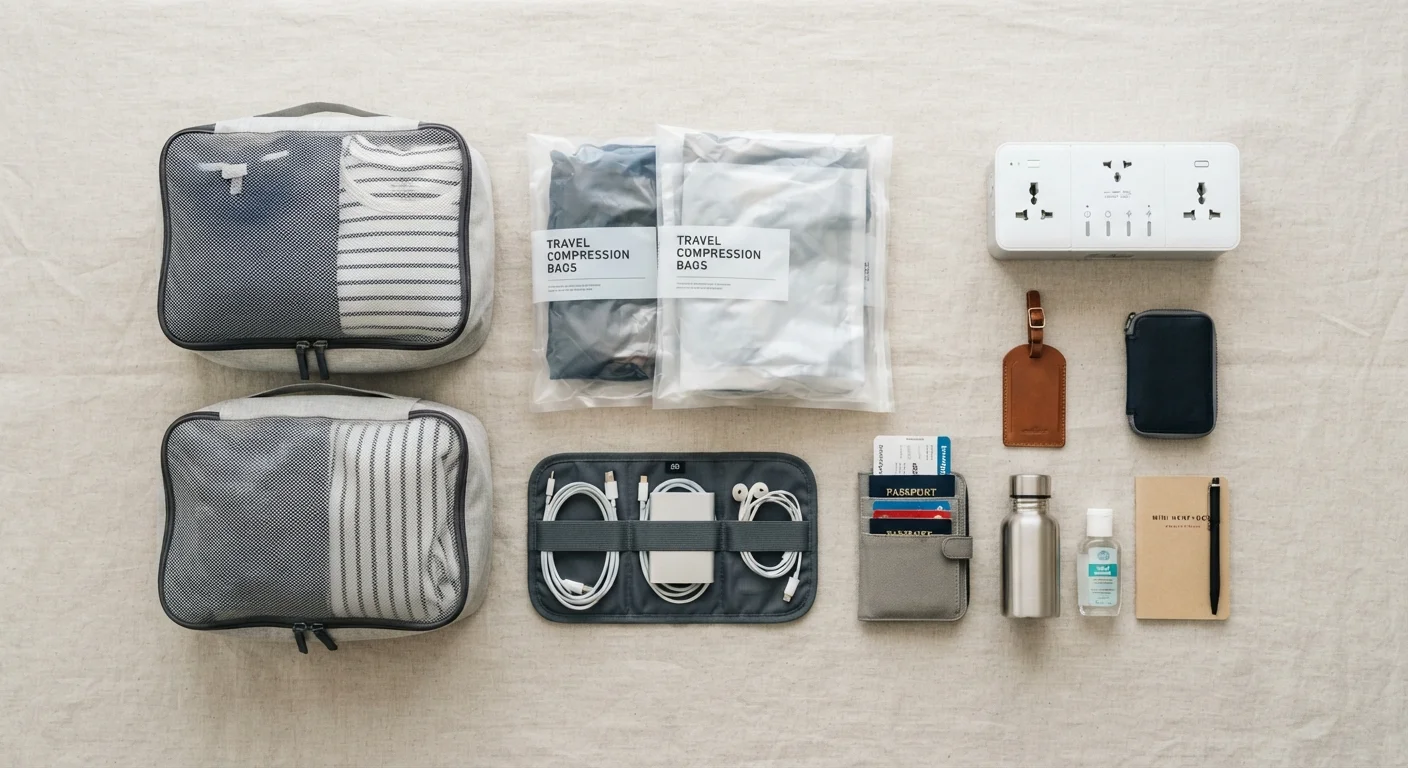
Photo: BridgeWish.com | Reliable Source Of Information editorial
Why Travel Gear Actually Matters
Packing light isn't just about fitting into an overhead bin — it's about moving through your trip with less friction at every step. The right accessories act as a system: they protect your devices, keep your clothes unwrinkled, and eliminate the frantic rummaging that drains energy before you've even boarded. Understanding what each category of gear does — and what it doesn't — helps you invest in tools that genuinely earn their weight.
This guide focuses on three of the most practical gear families: power adapters, luggage organizers, and space-saving solutions. For a broader look at building out your full kit, see our complete packing guide.
| Outlet types worldwide | 15+ distinct plug types (International Electrotechnical Commission (IEC) classifications) |
| Standard US voltage | 120V / 60Hz (US National Electrical Code) |
| Most common international voltage | 220–240V / 50Hz (IEC regional standards) |
| Packing cube weight range | 1–4 oz per cube (typical) (General consumer product range) |
| Compression bag space reduction | Up to 50% volume reduction (Manufacturer general claims; results vary by item type) |
Power Adapters: Understanding the Basics
Plug shapes and voltage standards vary by country — a fact that catches many first-time international travelers off guard. A travel adapter converts the physical plug shape so your device fits a foreign outlet, while a voltage converter (or transformer) changes the actual electrical current. Most modern consumer electronics — laptops, phones, cameras — include a built-in dual-voltage power supply (usually labeled 100–240V on the brick), which means they only need an adapter, not a converter. Always check your device's label before assuming.
A universal travel adapter typically covers outlet types found across North America, Europe, the UK, Australia, and much of Asia and Africa in one compact unit. Many include USB-A and USB-C ports, allowing you to charge multiple devices from a single outlet — a real advantage in hotel rooms where outlets are scarce.
Travel adapter
A device that changes the shape of a plug so it physically fits into a foreign electrical outlet. It does not change voltage or wattage.
Voltage converter
A device that changes the electrical current from one voltage standard to another — for example, from 220V to 110V. Required for older or single-voltage appliances used abroad.
Dual-voltage device
An electronic device whose power supply can operate on both 110–120V and 220–240V. Check the label on the power brick — it typically reads '100–240V.'
Packing cube
A lightweight, zippered fabric container used to organize clothing or gear inside a bag. Cubes do not compress contents but keep items separated and accessible.
Compression bag
A sealable bag designed to reduce the volume of clothing by expelling air, either manually or with a vacuum. Most useful for bulky or infrequently accessed items.
Universal adapter
An adapter designed to accommodate multiple international plug types in one unit, typically covering the most common outlet formats found across major travel regions.
One important safety note: adapters don't protect against power surges. If you're traveling to destinations with unstable electrical infrastructure, consider a surge-protected adapter or a portable surge strip with a universal plug.
Organizers: Cubes, Folders, and Pouches
Packing cubes are fabric containers — usually rectangular and zippered — that segment your luggage into zones. One cube for tops, another for bottoms, a smaller one for undergarments: the system makes unpacking fast and re-packing even faster. They don't compress clothing but do prevent the avalanche effect when you open your bag mid-trip.
Compression cubes do both: they organize and reduce bulk by forcing air out through a secondary zip. They're genuinely useful for bulkier items like fleeces or jeans. For a side-by-side comparison of cubes, compression bags, and folder inserts, the packing organizer breakdown covers exactly what each one is designed for.
Cord organizers and cable rolls solve a specific but universally maddening problem: tangled electronics. A small zippered pouch or a roll-up case with elastic loops keeps charging cables, earbuds, and adapters accessible without the knot.
Don't Overload Your Adapter's USB Ports
For trips where clothing versatility matters as much as organization, pairing good cubes with a smart wardrobe strategy pays off — see how to build a travel wardrobe for guidance on choosing pieces that stretch across multiple occasions.
Space-Savers: Compression Bags and Slim Wallets
Vacuum compression bags are the heavy-duty option for saving space: clothing goes in, air is pressed out, and the bag seals flat. They work best for bulky items you're not accessing frequently — think ski layers or a heavy sweater packed for a shoulder-season trip. The trade-off is that repacking mid-trip requires either a vacuum or significant manual effort to re-compress.
Slim travel wallets and document organizers keep passports, boarding passes, foreign currency, and cards in one accessible place. Models that sit flat against the chest under clothing offer added pickpocket resistance — a practical consideration in busy transit hubs. These aren't a guarantee of security, but they do reduce casual opportunistic risk.
Whatever your trip style, the gear that works is the gear that matches your actual travel habits. Packing for specific trip types breaks down what each style really demands — so you're not carrying a compression bag you don't need on a weekend city break. For a curated look at gear that consistently solves real problems, see our packing essentials guide.
15+
Distinct electrical plug types used worldwide
According to IEC classifications, travelers crossing multiple regions often encounter several incompatible outlet formats in a single trip.
~50%
Volume reduction possible with compression bags
Manufacturers generally cite up to 50% volume reduction for soft items like fleeces and knitwear; actual results vary by fabric and fill.
The content on this site is for informational purposes only and is not a substitute for professional advice. Always consult a qualified professional for guidance specific to your situation.