
Your First Time Packing for a Week-Long Trip

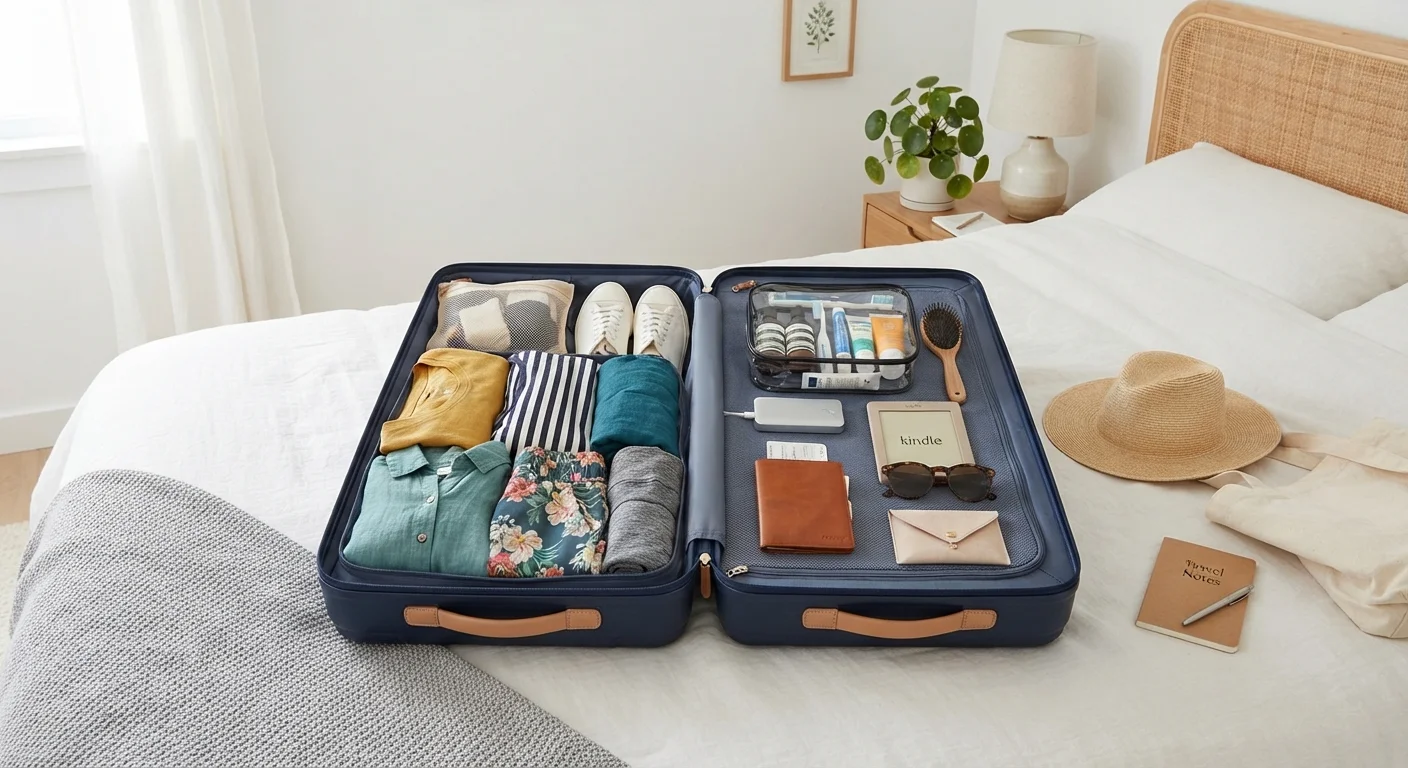
Photo: BridgeWish.com | Reliable Source Of Information editorial
Key Takeaways
- A carry-on or medium-sized bag is usually sufficient for a seven-day trip when clothes are chosen strategically.
- Building outfits around 5–7 versatile, mix-and-match pieces eliminates the need to pack for every scenario.
- Rolling clothes and using packing cubes maximizes space and keeps your bag organized throughout the trip.
- Toiletries and tech accessories are the most common sources of unnecessary weight — audit both carefully.
- Packing the night before — not the morning of — gives you time to cut items you don't really need.
Choosing the Right Bag for a Week
Your bag choice sets every constraint that follows — volume, carry-on eligibility, and how your back feels by day three. For most seven-day trips, a carry-on suitcase or a 40–50 liter travel backpack is the sweet spot. Either gives you enough room for a week's clothing without forcing you to check luggage.
Before committing to a bag, think about your trip type. A rolling carry-on is easier for urban trips with smooth sidewalks and hotel lobbies. A travel backpack is more practical for destinations with cobblestones, public transit, or frequent moves between cities. See our carry-on vs. checked bag guide for a fuller breakdown of trade-offs.
Carry-on bag
A piece of luggage small enough to fit in an airplane's overhead bin, avoiding the need to check it at the gate. Size limits vary by airline.
Packing cubes
Zippered fabric organizers that fit inside your main bag, used to separate and compress different categories of clothing or gear.
TSA 3-1-1 rule
A U.S. Transportation Security Administration rule requiring that liquids in carry-on bags be in containers of 3.4 oz (100ml) or less, all fitting in one quart-sized clear bag, with one bag per passenger.
Capsule wardrobe
A small, curated collection of clothing items that all mix and match with each other, maximizing outfit combinations from a minimal number of pieces.
Travel backpack
A structured, carry-on-sized backpack designed for travel, typically with a frame, multiple compartments, and straps optimized for carrying on your back.
Whichever bag you choose, verify the dimensions against your airline's carry-on policy before you travel — policies vary by carrier and even by aircraft type. If you're heading somewhere cold or packing specialty gear, a checked bag may occasionally make sense, but it's rarely necessary for a standard week-long trip.
Building a Clothing System That Works
The biggest packing mistake first-timers make is thinking in outfits instead of pieces. Packing seven complete outfits means 14+ items before you've touched socks or a jacket. Instead, build a small wardrobe of pieces that work together.
A practical starting point for a week: 3 tops, 2 bottoms, 1 layer, and 1 pair of versatile shoes — plus what you wear onto the plane. Add a dress or a second pair of shoes only if your itinerary genuinely calls for it. Choosing neutral colors and simple patterns makes it easier to mix pieces into different combinations each day.
This approach is sometimes called a capsule wardrobe, and it's particularly effective for trips where you'll be moving between different settings — sightseeing, a nice dinner, a day hike. For more on selecting clothing that layers and adapts, see our guide to building a travel wardrobe.
Test Your Outfits Before You Pack
If your destination involves an extreme or variable climate, your clothing calculus changes — check out packing for extreme climates for climate-specific guidance.
Toiletries, Tech, and the Rest
Toiletries are where bags quietly get heavy. The rule of thumb: bring only what you use every single day and can't reliably find at your destination. Most hotels and pharmacies stock basics like shampoo, conditioner, and body wash. Travel-size containers for must-haves keep weight in check and keep you within TSA's 3-1-1 liquid rules for carry-on bags.
For tech, pack only what you'll genuinely use. A phone, headphones, one universal charging cable, and a compact power bank cover most travelers' needs. Resist the urge to bring a full laptop unless you know you'll work — a tablet or nothing is often the lighter, smarter call.
TSA Liquids Rule Applies to Carry-Ons
Don't overlook documents: passport (if traveling internationally), ID, any printed reservation confirmations, travel insurance details, and an emergency contact list stored separately from your phone. Use our one-week packing checklist to make sure nothing critical slips through.
How to Actually Fit It All In
Packing technique matters more than most first-timers expect. Two methods consistently outperform just folding and stacking: rolling clothing and using packing cubes. Rolling reduces wrinkles and lets you see everything at once. Packing cubes compress soft items and keep categories separated — no more excavating your bag for a single sock.
Pack heaviest items closest to your back or the wheels, and fill shoes with socks or small items to use every inch of space. Place things you'll need first — a travel pillow, your charger, an in-flight layer — at the top or in an external pocket.
For a deeper look at smart packing systems and gear that earns its place, explore gear worth carrying and the complete packing guide.
Common First-Timer Mistakes to Avoid
Even well-intentioned packers fall into a few predictable traps. Here's what to watch for:
- Packing for worst-case scenarios. Most "just in case" items never leave the bag. Pack for what you'll actually do, not every theoretical event.
- Ignoring what you'll wear on travel day. Your travel-day outfit counts. Wearing your bulkiest shoes and heaviest layer on the plane frees up significant bag space.
- Forgetting the return trip. If you plan to shop at your destination, leave room — or pack a foldable tote bag that compresses to almost nothing.
- Waiting until the morning of. Packing the night before gives you time to remove things you've reconsidered and grab anything you realize is missing.
Once you've got a week-long trip under your belt, you may find yourself naturally thinking about packing differently — the way frequent travelers approach it. And if international travel is on your horizon, our guide on building a packing system for international trips is a great next step.
One-Week Trip Packing Checklist
A destination-flexible checklist covering clothing, toiletries, documents, and tech for a seven-day trip — useful to run through before you zip up your bag.
Trip Planning Hub
Essential steps and tips for organizing stress-free domestic and international trips, from booking to departure-day logistics.
TSA.gov — What Can I Bring?
The official TSA search tool lets you check whether any specific item is allowed in carry-on or checked baggage before you pack it.
Frequently Asked Questions
The content on this site is for informational purposes only and is not a substitute for professional advice. Always consult a qualified professional for guidance specific to your situation.