
Your First International Trip: Building a Packing System That Travels with You

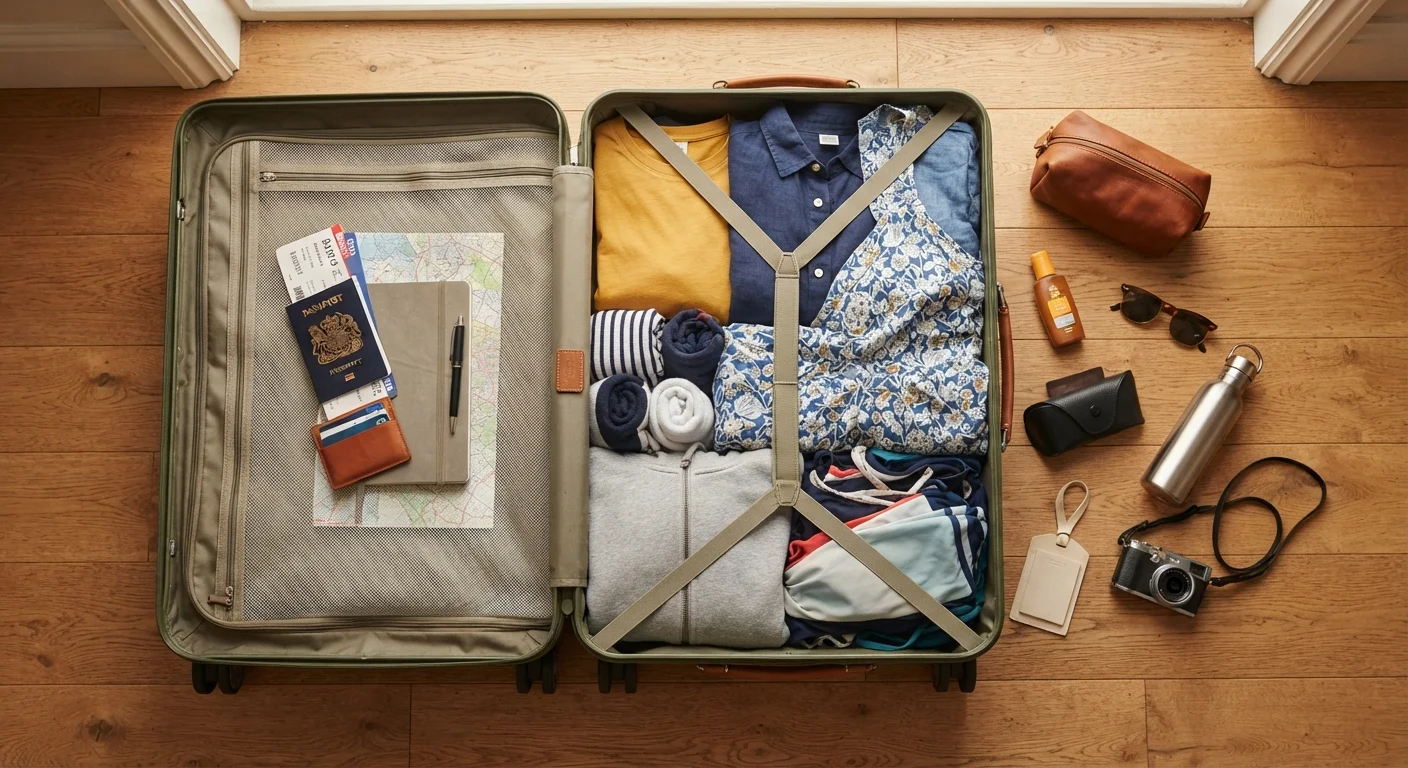
Photo: BridgeWish.com | Reliable Source Of Information editorial
Key Takeaways
- Carry-on luggage is often sufficient for trips up to two weeks and simplifies airport logistics.
- A mix-and-match clothing capsule built around neutrals reduces how much you pack without limiting outfit options.
- Physical copies of key documents stored separately from originals can save a trip if something goes wrong.
- A universal power adapter and a portable charger are two of the highest-value items you can pack.
- A repeatable packing checklist means you build the system once and use it on every future trip.
Choosing the Right Luggage for International Travel
Your luggage choice shapes your entire travel experience before you even leave home. For most first-time international trips, the real question isn't which suitcase to buy — it's whether you need a checked bag at all.
A carry-on bag (typically fitting within airline size limits around 22" x 14" x 9") is enough for most trips lasting one to two weeks. You skip baggage fees, avoid the anxiety of waiting at the carousel, and move through airports faster. If your trip runs longer or involves formal events requiring bulkier attire, a medium checked suitcase (24"–26") is a reasonable addition — but resist sizing up further.
When evaluating bags, consider:
- Hard-shell vs. soft-shell: Hard cases resist water and absorb impact; soft bags compress into overhead bins more forgivingly.
- Spinner wheels vs. two-wheel rollers: Spinners glide in any direction, ideal for busy airports.
- Weight of the bag itself: Lighter luggage means more room within airline weight limits for what you actually need.
Also invest in a personal item — a daypack or structured tote — that fits under the seat in front of you. This holds your valuables, documents, and anything you need during the flight. See our complete guide to packing for any trip for a deeper breakdown of luggage options by trip type.
Carry-on bag
A piece of luggage small enough to fit in the overhead bin of an airplane. Most airlines have size limits around 22" x 14" x 9", but always check your specific airline's rules.
Personal item
A smaller bag (like a backpack or tote) that fits under the seat in front of you on a plane. Most airlines allow one personal item in addition to a carry-on.
Capsule wardrobe
A small, curated set of clothing where every piece works with multiple others, letting you create many outfits from fewer items.
Packing cubes
Zippered fabric organizers that compress clothes and keep different categories of items separated inside your bag.
TSA 3-1-1 rule
A US airport security rule requiring that carry-on liquids be in containers of 3.4 oz (100ml) or less, placed in a single quart-sized clear zip-top bag.
Universal power adapter
A device that allows your electronics to plug into different types of electrical outlets found in countries around the world, since outlet shapes and voltages vary by region.
Building a Clothing Strategy That Actually Works
Overpacking clothes is the universal first-timer mistake. The fix is a capsule wardrobe — a small collection of versatile pieces that mix and match into many outfits.
Start with a neutral color palette (navy, gray, black, white, khaki). Every piece should work with at least two others. Then layer in one or two accent items for personality. A general framework for a one-week trip:
- 5–6 tops (including one that can dress up)
- 2–3 bottoms (pants or skirts that work day and evening)
- 1 lightweight jacket or layer
- 3–4 pairs of underwear (quick-dry fabrics let you wash and re-wear)
- 2 pairs of versatile shoes maximum
Shoes are the biggest space consumer — wear your bulkiest pair on the plane. Choose footwear that works across multiple settings: a comfortable walking shoe that doesn't look out of place at a nice dinner is worth its weight.
Roll, Don't Just Fold
Research your destination's climate and cultural dress norms before finalizing your list. Some religious or heritage sites require covered shoulders and knees. Our first-time international traveler's destination guide covers what to look for when scoping out your destination.
Documents, Money, and Must-Have Essentials
This is the category where preparation genuinely matters. A forgotten charger is an inconvenience; missing documentation can derail a trip entirely.
Passport and entry documents: Make two photocopies of your passport's photo page — leave one at home with a trusted contact and pack the other separately from the original. Check your destination's entry requirements (visa, proof of return travel, vaccination records) through official government sources well ahead of departure, as requirements vary and can change.
Don't Pack Valuables in Checked Luggage
Money: Notify your bank before you travel to avoid fraud blocks on your card abroad. Carry a small amount of local currency for arrival (for transit, tips, or small purchases) and rely on ATM withdrawals for the rest — generally offering better exchange rates than airport kiosks. Have two payment methods: a debit card and a backup credit card stored in a separate location.
Insurance: Travel insurance can cover trip cancellation, medical emergencies abroad, and lost baggage. Review what your existing credit card or health plan covers internationally before purchasing a separate policy — and read the fine print carefully. This is a personal financial decision worth researching before your trip; consult the policy terms and, if needed, a licensed professional for guidance specific to your situation.
Toiletries, Tech, and the Gear That Earns Its Weight
Every item in your bag should justify the space it takes. For toiletries, the TSA's 3-1-1 rule applies to carry-ons: liquids in containers of 3.4 oz (100ml) or less, all fitting in one quart-sized clear bag. Solid alternatives — shampoo bars, solid sunscreen — bypass this limit entirely and last longer.
Pack only what you can't easily buy at your destination. Most international cities have pharmacies and grocery stores where you can restock basics. Bring a small first-aid kit with adhesive bandages, pain reliever, antidiarrheal tablets, and any prescription medication (in original labeled containers) — enough to last your trip.
Tech essentials worth packing:
- Universal power adapter: Essential — outlet shapes vary by country and region.
- Portable battery pack: Keeps your phone alive during long sightseeing days.
- Unlocked phone or international SIM plan: Connectivity makes navigation and translation dramatically easier.
- Lightweight earbuds: For flights, transit, and downtime.
Skip the travel-specific gadgets that promise convenience but rarely earn their bag space. A phone with downloaded offline maps (Google Maps, Maps.me) outperforms most dedicated navigation devices.
Putting It All Together: Your Repeatable Packing System
The real power of a packing system is that you build it once and refine it over time. After your first trip, you'll know exactly what you used, what you wished you had, and what came home untouched.
Here's how to structure your system:
- Start with a master checklist. Write down every category (clothing, documents, toiletries, tech, medications) and the specific items under each. Keep this document somewhere permanent — a notes app, a shared folder — so you can update it after every trip.
- Use packing cubes. Assign one cube per category. This compresses clothing, keeps things findable, and makes repacking mid-trip effortless.
- Pack your bag 48 hours early. This gives you time to realize what's missing and remove anything you added impulsively.
- Weigh it before you go. Knowing your bag's weight prevents check-in surprises and helps you make smarter cuts.
The goal isn't a perfectly minimal bag — it's a bag that fits your trip without slowing you down. Over time, your system gets leaner and more confident with every journey.
Before you finalize your plans, make sure you've worked through the bigger logistics too. Our guide on what to sort out before booking your first international trip walks you through the pre-booking decisions that can make or break the experience. And if you're still deciding where to go, the Destinations & Stays hub is a great place to start exploring options.
TSA Traveler Information
The official Transportation Security Administration site explains current carry-on rules, prohibited items, and what to expect at US airport security checkpoints — essential reading before your first international departure.
US Department of State Travel Portal
The official source for US passport information, country-specific travel advisories, and visa guidance. Always verify entry requirements for your destination here before booking.
Offline Maps App (Maps.me or Google Maps Offline)
Download your destination's maps before departure so you can navigate without cellular data — a practical move for the moment you step off the plane in a new country.
Frequently Asked Questions
The content on this site is for informational purposes only and is not a substitute for professional advice. Always consult a qualified professional for guidance specific to your situation.