
Distracted Driving vs. Impaired Driving: Understanding Two Distinct Road Risks

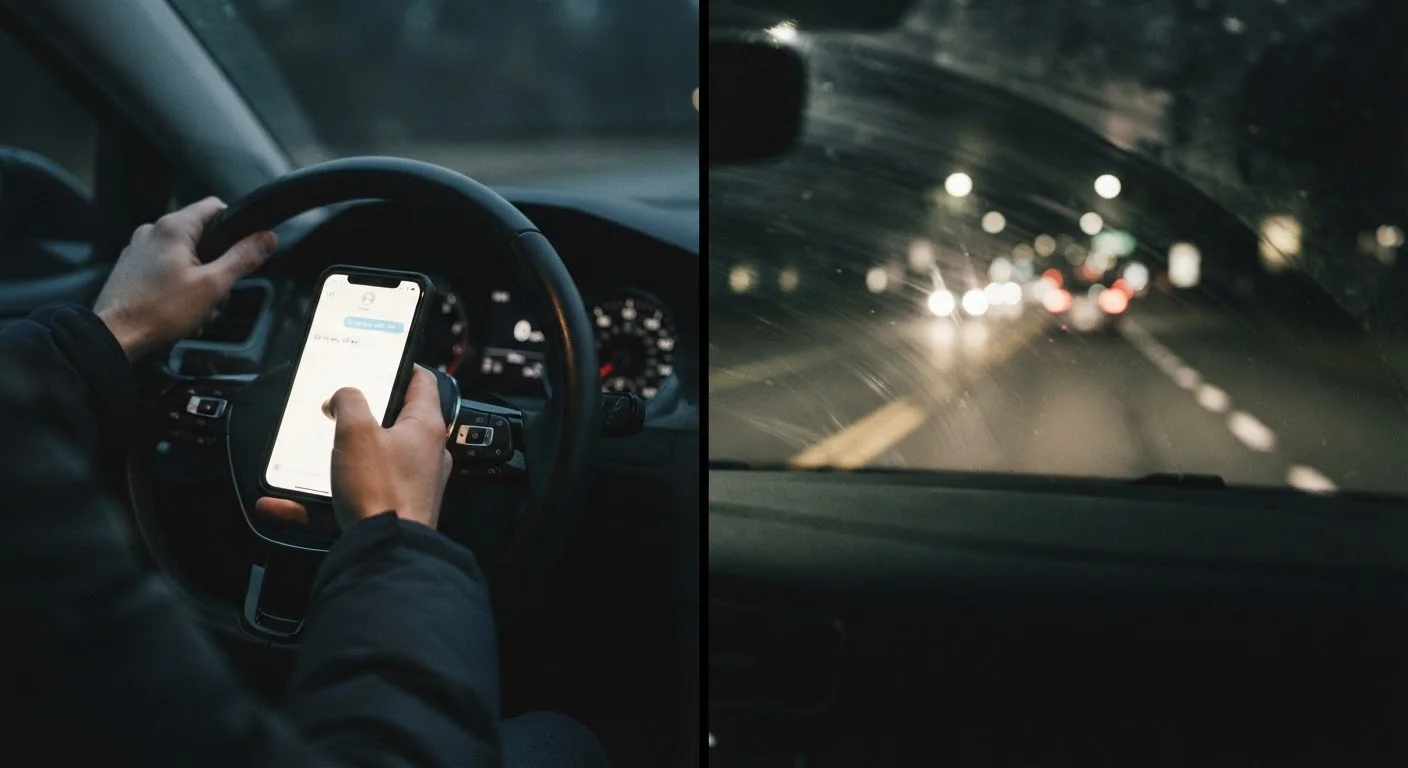
Photo: BridgeWish.com | Reliable Source Of Information editorial
Key Takeaways
- Distracted driving diverts attention temporarily; impaired driving degrades underlying cognitive and physical capability.
- Both significantly increase crash risk, but they require different legal frameworks and prevention strategies.
- Impairment from alcohol, drugs, or fatigue can persist long after a driver feels subjectively 'fine.'
- Distraction is often voluntary and situational; impairment is a physiological state that cannot be overridden by willpower.
- Combining both - for example, texting while fatigued - multiplies risk exponentially rather than additively.
Two Different Problems Behind the Wheel
Distracted driving and impaired driving are often mentioned in the same breath - and for good reason. Both reduce a driver's ability to operate a vehicle safely, and both contribute to thousands of preventable crashes each year in the United States. But treating them as interchangeable misses a critical distinction: they undermine safe driving through entirely different mechanisms.
Distracted driving is fundamentally an attention problem. The driver retains their baseline physical and cognitive capabilities but redirects them - voluntarily or involuntarily - away from the task of driving. A glance at a phone, a conversation with a passenger, or adjusting the navigation system all momentarily remove the driver's eyes, hands, or mental focus from the road. For a deeper look at how fractured attention creates dangerous gaps, see how divided attention affects driving.
Impaired driving, by contrast, is a capability problem. Substances like alcohol, cannabis, or certain prescription medications - as well as extreme fatigue - alter the neurological systems that govern reaction time, coordination, vision, and judgment. The driver isn't just distracted; the tools they need to drive safely are themselves compromised.
How Each Type of Risk Operates
Understanding the mechanics of each risk helps explain why prevention strategies differ so sharply.
With distraction, the danger is intermittent. Research consistently shows that a driver reading a text message at 55 mph travels the length of a football field without meaningfully processing the road ahead. Yet once the distraction ends, full capability is restored almost immediately. The hazard is situational - it exists when the distracting behavior occurs and recedes when it stops.
Impairment works differently. Alcohol, for example, begins affecting the central nervous system well below the legal limit of 0.08% blood alcohol concentration (BAC). At 0.05% BAC, the NHTSA notes that drivers commonly experience reduced coordination and difficulty steering. At 0.08%, reaction time, tracking ability, and concentration are all measurably degraded. Critically, impaired drivers frequently underestimate how compromised they are - subjective alertness is a poor proxy for actual performance. This same gap between perceived and actual capability applies to drowsy driving; see what happens to the body during driver fatigue for a detailed breakdown.
| Criterion | Distracted Driving | Impaired Driving |
|---|---|---|
| Core mechanism | Diverted attention | Degraded cognitive/physical capability |
| Duration of risk | Intermittent, tied to the behavior | Persistent until substance clears or rest is obtained |
| Common causes | Phone use, passengers, in-car controls | Alcohol, drugs, fatigue, certain medications |
| Driver self-awareness | Often conscious of the distraction | Frequently underestimates own impairment |
| Legal standard | Varies by state; behavior-based laws | Uniform BAC threshold (0.08%) plus drug impairment laws |
| Enforcement tool | Direct observation by law enforcement | Breathalyzer, blood test, field sobriety test |
| Primary prevention | Behavioral change; remove distractions | Do not drive; plan an alternative in advance |
Legal Frameworks and Enforcement
The legal treatment of these two risks reflects their different natures. Impaired driving - specifically driving under the influence (DUI) or driving while intoxicated (DWI) - is governed by quantifiable thresholds in every US state. A BAC of 0.08% or higher is the standard legal limit for non-commercial drivers, with stricter limits applying to commercial drivers (0.04%) and drivers under 21 (commonly 0.02% or zero-tolerance in many states). Drug impairment laws are evolving as cannabis legalization expands, but the principle remains: measurable physiological impairment is a criminal offense.
Distracted driving laws vary considerably by state. All 50 states have laws addressing distracted driving in some form, but the scope differs - some prohibit handheld phone use broadly, while others target only texting. Penalties range from modest fines to license points depending on jurisdiction. Unlike DUI enforcement, there is no roadside breathalyzer equivalent for distraction, making enforcement more dependent on direct observation by law enforcement.
Prescription Medications and Impairment
Prevention: Where the Approaches Diverge
Because distracted and impaired driving operate differently, the strategies for preventing them diverge accordingly.
Distracted driving is largely behavioral and situational. Practical countermeasures - silencing the phone before driving, enabling do-not-disturb modes, pre-setting navigation - directly eliminate the behavior that creates risk. The driver retains full capability; the goal is simply to keep attention focused. Passengers can reinforce this, or undermine it. Research on social dynamics shows the risk profile inside the vehicle shifts noticeably depending on who is present - a topic explored further in how passengers affect driving risk.
Preventing impaired driving requires a more fundamental commitment: not driving when impaired, full stop. Unlike distraction, impairment cannot be managed in the moment through better habits or technology use. Planning ahead - designating a driver, using a rideshare service, or staying put - is the only reliable prevention. Understanding how fatigue mirrors substance impairment is equally important; see how fatigue affects driving even when you feel fine.
3,308
US distraction-related traffic deaths (2022)
According to NHTSA data, distracted driving claimed 3,308 lives in the United States in 2022.
13,524
Alcohol-impaired driving fatalities (2022)
NHTSA reported 13,524 alcohol-impaired driving fatalities in 2022, representing 32% of all US traffic deaths that year.
5 seconds
Average eyes-off-road time per text read
The NHTSA estimates that reading a text takes an average of five seconds - enough to travel over 360 feet at highway speed without watching the road.
Both risks change character depending on driving environment. Highway speeds compress the margin for error under distraction; city intersections create frequent impairment-related decision points. For context on how the driving environment itself shapes risk, see how risk shifts between highway and city driving.
The content on this site is for informational purposes only and is not a substitute for professional advice. Always consult a qualified professional for guidance specific to your situation.