
Highway Driving vs. City Driving: How the Risk Profile Changes

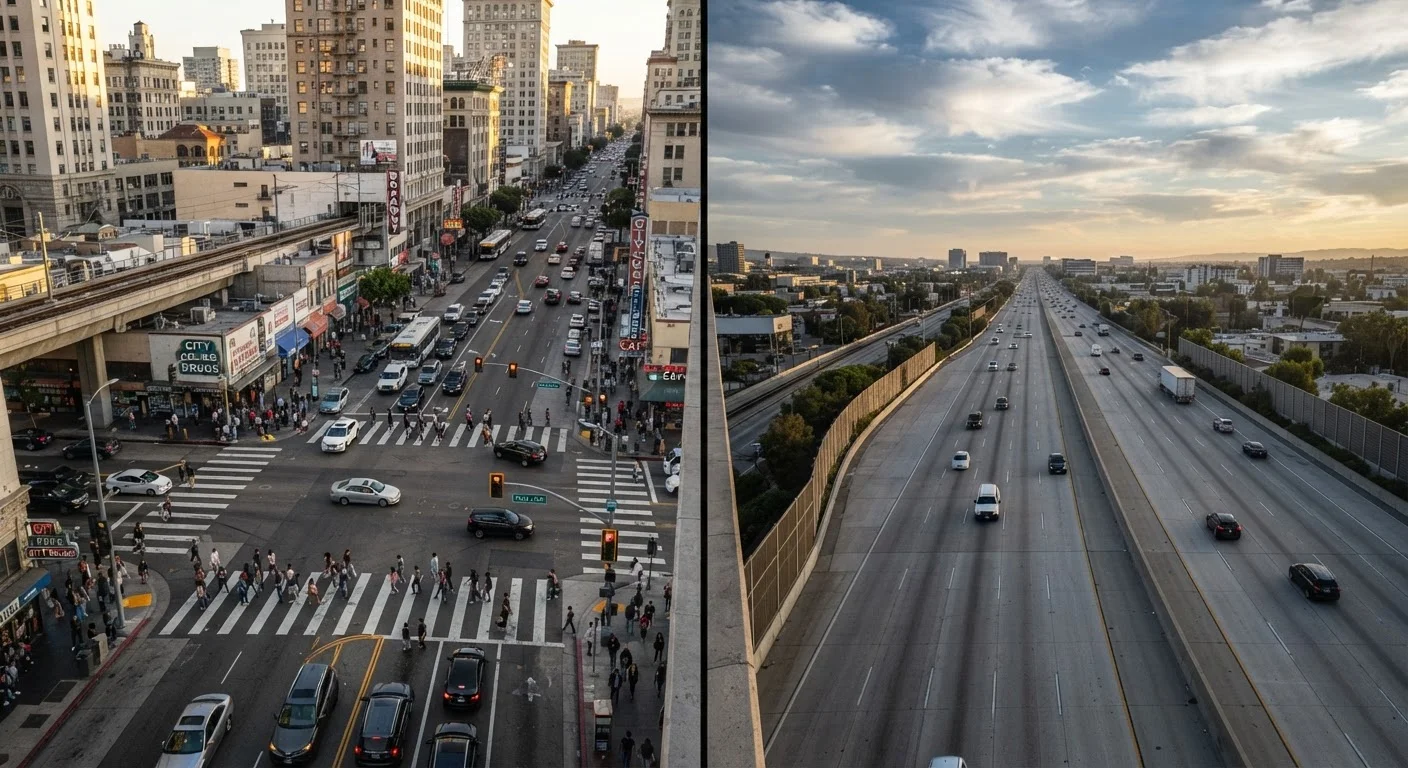
Photo: BridgeWish.com | Reliable Source Of Information editorial
Key Takeaways
- Highway crashes are less frequent but tend to be more severe due to higher speeds.
- City driving involves more crashes overall, largely driven by intersection conflicts and pedestrian exposure.
- Fatigue and inattention are the dominant risks on highways; distraction and decision overload dominate in cities.
- Effective risk management requires adapting your driving strategy to the environment, not applying a one-size-fits-all approach.
- Both environments reward anticipation - scanning well ahead and reading traffic patterns before problems develop.
How the Two Environments Create Different Risk Profiles
At first glance, highways might seem more dangerous - high speeds, large trucks, minimal margins for error. But the picture is more nuanced. According to the National Highway Traffic Safety Administration (NHTSA), urban roads consistently account for a majority of total traffic fatalities in the United States, driven largely by the sheer volume of interactions between vehicles, cyclists, and pedestrians.
That said, when crashes do happen on highways, the outcomes are disproportionately severe. Speed amplifies the forces involved in any collision. A crash at 70 mph releases far more energy than one at 30 mph - the relationship is not linear but exponential, following basic physics of kinetic energy. This means highway incidents, while fewer per mile, are more likely to result in serious injury or death.
City driving, by contrast, generates more frequent but often lower-severity incidents. Rear-end collisions at intersections, sideswipes in tight lanes, and conflicts with pedestrians are everyday occurrences in dense urban areas. For a deeper look at one of the most concentrated risk points, see how to navigate intersections safely.
| Criterion | Highway Driving | City Driving |
|---|---|---|
| Crash frequency | Lower per mile traveled | Higher per mile traveled |
| Crash severity | Higher - speed amplifies impact | Lower - reduced speed limits damage |
| Primary risk factor | Fatigue, speed, tailgating | Distraction, intersection conflicts |
| Pedestrian exposure | Minimal | High - frequent crossing points |
| Cognitive demand | Sustained focus over time | Rapid, constant decision-making |
| Weather impact | Severe - high speed + poor visibility | Moderate - lower speeds reduce severity |
| Fatigue risk | High - monotony reduces alertness | Lower - environment maintains stimulation |
The Cognitive Demands: Speed vs. Complexity
Highway driving places a premium on sustained attention over time. The environment is relatively predictable - lanes are wide, signals are rare, and traffic moves in one direction. The risk lies in complacency. When the road becomes monotonous, attention drifts. Drowsy driving is a well-documented highway hazard, particularly on long trips without breaks. Reaction time at highway speeds is also compressed: at 65 mph, a vehicle travels roughly 95 feet per second, leaving very little margin if a hazard appears suddenly.
City driving flips this dynamic. Rather than sustained focus, it demands rapid context-switching - processing traffic signals, scanning crosswalks, anticipating the behavior of cyclists and double-parked vehicles, and managing tight gaps. The cognitive load is high but varied, which keeps drivers more alert. However, this same complexity creates more opportunities for distraction to cause harm. Glancing at a phone for two seconds while moving through an intersection is a categorically different risk than the same lapse on an open highway. The distinction between distracted and impaired driving is worth understanding in this context.
~54%
Urban share of U.S. traffic fatalities
NHTSA data consistently shows urban roads account for more than half of total U.S. traffic deaths, largely due to pedestrian and intersection exposure.
95 ft/sec
Distance traveled per second at 65 mph
At typical highway speeds, a vehicle covers nearly 100 feet every second, significantly compressing reaction time when hazards appear.
3 sec
Recommended minimum following gap
Safety organizations including the NHTSA recommend maintaining at least a three-second following distance, with more needed in poor conditions.
Weather, Time of Day, and Environmental Factors
Environmental conditions affect city and highway driving differently. Rain, for example, reduces traction on both road types - but on highways, reduced visibility at high speeds creates longer stopping distances that may exceed the range of headlights. Urban streets benefit from lower speeds but suffer from drainage issues, pedestrian behavior changes, and more complex signal timing. Adjusting for rain, ice, and snow requires environment-specific thinking, not just generic caution.
Nighttime compounds the highway risk further. Reduced visibility at high speeds shortens effective reaction windows considerably. Night driving carries risks many drivers underestimate, and this is especially true on rural or suburban highways where lighting is sparse and wildlife crossings are common.
Rural Highways Present Unique Risks
Driver experience also matters. New drivers often find city driving more immediately stressful, while inexperienced highway drivers may underestimate the risks of following too closely at high speeds. Road safety priorities shift across different life stages, and understanding your own risk profile is part of becoming a safer driver.
Adapting Your Habits to Match the Environment
Effective drivers don't use the same mental framework for a freeway commute and a downtown errand run. On highways, core habits include maintaining safe following distances (a minimum three-second gap is a widely recommended baseline), staying out of blind spots of large vehicles, and planning rest breaks on long trips to counter fatigue. For a more detailed breakdown, evidence-backed highway driving habits are worth reviewing.
In cities, the priority shifts to active scanning - looking two to three blocks ahead rather than just the car in front, checking mirrors frequently, and anticipating pedestrian movement at crosswalks. Managing space around your vehicle is equally important; urban driving rewards patience and predictability over aggressive lane changes. Complex situations like roundabouts and zipper merges add another layer of decision-making. Understanding how these intersections work reduces hesitation and conflict.
One often-overlooked factor is who's in the car. Passengers can either help or hinder situational awareness depending on the dynamic. How passengers affect driver risk is a dimension worth considering in both environments.
The content on this site is for informational purposes only and is not a substitute for professional advice. Always consult a qualified professional for guidance specific to your situation.