
Navigating Intersections Safely: Rules, Risks, and Situational Awareness

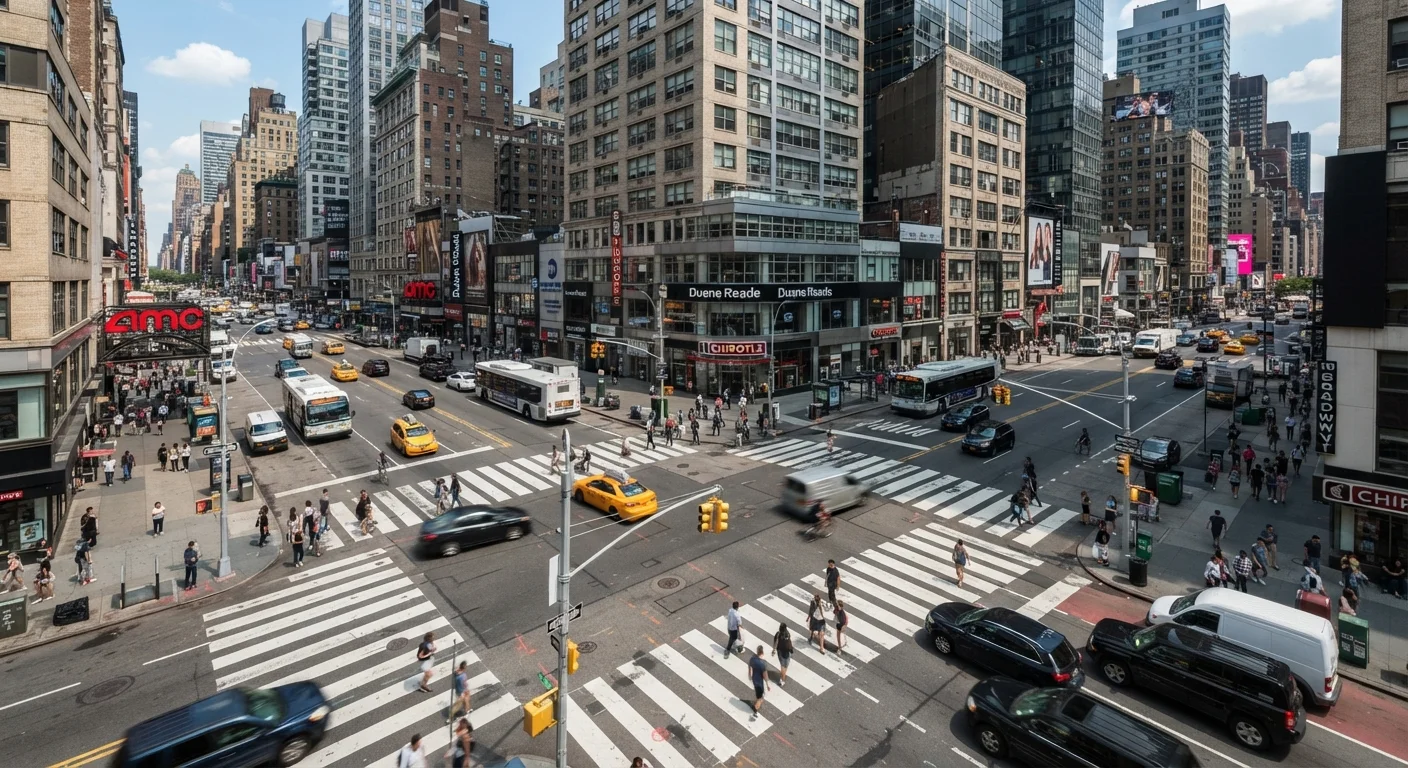
Photo: BridgeWish.com | Reliable Source Of Information editorial
Key Takeaways
- About 40% of all traffic crashes in the US occur at or near intersections, making them the single most dangerous road location.
- Failure to yield right-of-way is the leading driver error in intersection collisions.
- Green lights grant permission to enter an intersection - they do not guarantee it is clear or safe.
- Situational awareness - scanning ahead, tracking cross-traffic, and anticipating other drivers' actions - is your primary defense.
- Vulnerable users like pedestrians, cyclists, and motorcyclists face disproportionate risk at intersections and require extra driver attention.
- Low-light, wet, or high-speed approaches significantly amplify intersection hazards.
Why Intersections Are So Dangerous
Intersections are the points where traffic streams from multiple directions converge, creating a concentrated mix of competing movements - left turns crossing oncoming lanes, pedestrians stepping off curbs, cyclists filtering through gaps, and drivers reading signals while managing speed. That complexity is precisely why intersections account for approximately 40% of all US traffic crashes, according to Federal Highway Administration data.
The core problem is conflict points. A standard four-way signalized intersection can contain dozens of potential collision scenarios - vehicle-to-vehicle, vehicle-to-pedestrian, and vehicle-to-cyclist. Each additional approach or turning movement multiplies those conflicts. Unlike highway driving, where most traffic flows in a shared direction, intersections demand that drivers simultaneously process signals, signs, cross-traffic, and the behavior of other road users - often in a matter of seconds.
~40%
Of US crashes occur at intersections
According to Federal Highway Administration analysis of national crash data.
#1
Driver error: failure to yield right-of-way
Failure to yield is consistently cited as the leading contributing factor in intersection collisions by NHTSA crash studies.
2x
Higher fatality risk in T-bone crashes
Side-impact collisions - common at intersections - produce significantly higher fatality rates than front-to-rear crashes, per IIHS research.
For a deeper look at how intersection risks compare to highway hazards, see how driving demands shift between urban and highway environments.
The Core Rules Every Driver Must Know
Intersection rules exist to impose order on those conflict points. Misunderstanding them causes real collisions. The foundational rules include:
- Signal compliance: Red means stop behind the stop line. Yellow means prepare to stop - not accelerate to beat the light. Green means proceed only when the intersection is clear.
- Right-of-way at uncontrolled intersections: When no signal or sign is present, the vehicle that arrives first proceeds first. If two vehicles arrive simultaneously, the driver on the left yields to the driver on the right.
- Four-way stops: Vehicles proceed in order of arrival. Ties go to the driver on the right. Left-turning drivers yield to oncoming traffic going straight or turning right.
- Yielding on left turns: A driver turning left must yield to all oncoming traffic and crossing pedestrians before completing the turn - even on a green light.
- Right on red: Permitted in most US states after a full stop, but only when the way is clear. Some intersections post explicit prohibitions.
Many of these rules are routinely misread in practice. The rules drivers most commonly misunderstand covers the edge cases that cause real-world confusion, including merging and multi-lane right-of-way scenarios.
Treat Every Green as a Conditional Signal
Common Failure Points at Intersections
Knowing the rules is necessary but not sufficient. Most intersection crashes trace back to a short list of predictable errors:
- Failure to yield: The most frequently cited driver error in intersection crashes. It includes left-turn violations, rolling through stop signs, and misjudging gaps in cross-traffic.
- Running red lights: Whether from distraction, impatience, or misjudging a yellow, entering an intersection against a red is one of the leading causes of T-bone (side-impact) collisions - among the most injurious crash types.
- Distracted approach: Taking eyes off the road even briefly while decelerating toward a signal allows a driver to miss a pedestrian entering the crosswalk or a vehicle stopped ahead.
- Misjudging oncoming speed: Drivers turning left frequently underestimate how quickly oncoming vehicles are closing. This is amplified at dusk and in wet conditions when speed is harder to judge visually.
- Blocking the box: Entering an intersection without room to clear it traps vehicles in the path of crossing traffic when the signal changes.
New drivers are particularly vulnerable to these errors. The situations where new drivers are most likely to make dangerous errors identifies the intersection-related moments where mistakes cluster most heavily.
Running a Yellow Is Not Always Legal
Situational Awareness in Practice
Situational awareness - the habit of continuously scanning, anticipating, and positioning - is the skill that separates reactive drivers from genuinely safe ones. At intersections, it means more than watching the signal.
Treat a green light as permission to check - not permission to go. Before accelerating through any green, take one full second to scan left, then right, for vehicles or pedestrians who may still be in the intersection.
When waiting to complete a left turn in an intersection, keep your front wheels pointed straight ahead until you actually begin the turn. If you're rear-ended while waiting, straight wheels prevent your car from being pushed into oncoming traffic.
Key habits include:
- Scan cross-traffic before entering: Even on a green, glance left and right for vehicles that may be running a late yellow or red before committing to the intersection.
- Cover the brake on approach: Moving your foot from the accelerator to hover over the brake while decelerating cuts reaction time significantly if something changes ahead.
- Establish eye contact with pedestrians: A pedestrian waiting at a curb may step off unexpectedly. Making visual contact - or at minimum confirming they have seen your vehicle - reduces that risk.
- Anticipate the vehicle ahead: If the car in front stops abruptly at a yellow, following too closely removes your ability to react. Maintain adequate following distance even in slow urban traffic. The risks of closing gaps are detailed in why tailgating is more dangerous than most drivers realize.
- Position for visibility: In left-turn lanes, creep forward incrementally to improve sightlines past parked vehicles or oncoming traffic without overexposing the front of your car.
For a broader framework on reading traffic before problems develop, situational awareness on the road provides a practical guide to scanning habits and mental modeling.
Protecting Vulnerable Road Users
Pedestrians, cyclists, and motorcyclists are disproportionately harmed at intersections. They occupy the same conflict zones as turning vehicles but with far less physical protection. Drivers bear significant responsibility for managing that asymmetry.
Key considerations include:
- Check for cyclists before right turns: A right-turning vehicle and a cyclist traveling straight in the bike lane create a classic conflict. Always check the mirror and blind spot before turning.
- Look twice for motorcyclists: Motorcycles are harder to detect in a visual scan because of their narrower profile. When checking for oncoming traffic before a left turn, a second deliberate look specifically for two-wheeled vehicles is a practiced safety habit.
- Yield to pedestrians in crosswalks: Federal law and virtually all state laws require drivers to yield to pedestrians who are in or entering a marked crosswalk. This applies even when the pedestrian does not have a walk signal.
- Watch for pedestrians on right turns on red: When stopped and preparing to turn right, pedestrians may have a walk signal crossing the street you're turning onto. Check before rolling.
Sharing the road with cyclists, pedestrians, and motorcyclists covers the rules and awareness habits that protect every road user at intersections and beyond.
Conditions That Raise the Risk
Intersection danger is not static - several environmental and situational factors push the risk significantly higher:
- Low light: Dawn, dusk, and night reduce your ability to judge oncoming vehicle speed and spot pedestrians. Headlights should be on, and approach speed should decrease accordingly.
- Wet or icy pavement: Stopping distances increase sharply on slick surfaces. Begin deceleration earlier, and treat yellow lights as stop signals rather than permission to push through.
- Obstructed sightlines: Tall vehicles, utility poles, vegetation, or parked trucks can completely block the view of cross-traffic or pedestrians. Creep forward only after confirming visibility.
- High-speed approaches: Intersections on arterial roads where the speed limit is 45 mph or higher produce the most severe crash outcomes when violations occur. Slow to a speed that allows a genuine stop if needed.
- Unfamiliar intersections: Complex multi-lane or multi-phase signal intersections require a moment of extra processing time. If uncertain about lane assignments, reduce speed and read signage before committing.
Keeping your vehicle's brakes, tires, and lighting in reliable condition directly affects your ability to respond at intersections. The car maintenance hub covers the practical steps for keeping those systems in check.
Ultimately, safe intersection navigation is a practiced discipline - one built from knowing the rules, anticipating what others may do, and giving yourself the time and space to respond. Where drivers go wrong with merging and right-of-way is a useful companion read for filling in remaining gaps in right-of-way understanding.
The content on this site is for informational purposes only and is not a substitute for professional advice. Always consult a qualified professional for guidance specific to your situation.