
Merging, Yielding, and Right-of-Way: Where Most Drivers Go Wrong

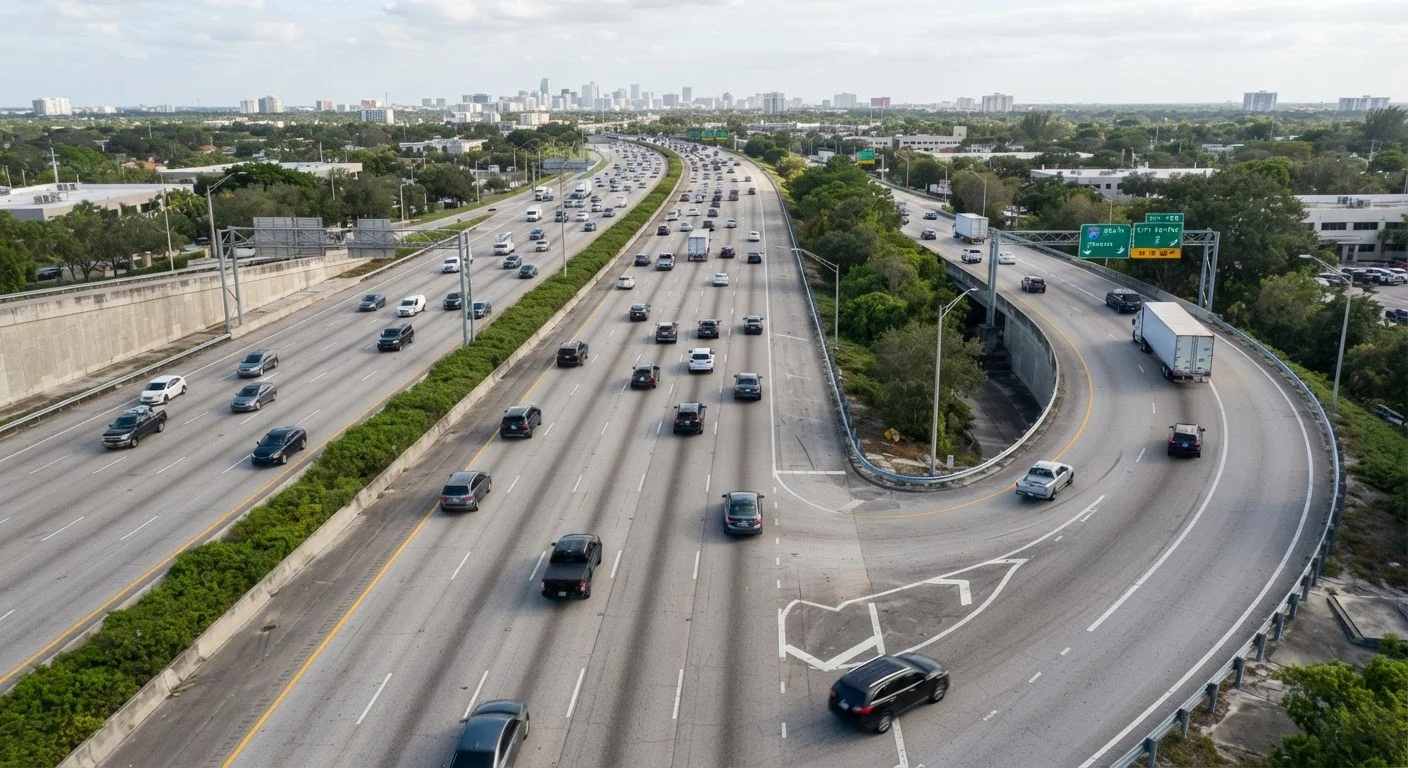
Photo: BridgeWish.com | Reliable Source Of Information editorial
Key Takeaways
- Right-of-way is assigned by law - assuming it without confirmation causes preventable crashes.
- The zipper merge is legally correct and more efficient than early lane changes during lane closures.
- At uncontrolled intersections, the driver on the left yields to the driver on the right.
- Pedestrians in a marked or unmarked crosswalk generally have right-of-way over turning vehicles.
- Yielding when legally required is not optional - failure to yield is a leading cause of intersection crashes.
Why Right-of-Way Rules Confuse So Many Drivers
Right-of-way rules are among the most misunderstood concepts in US traffic law - and the consequences are serious. Confusion about who goes first at intersections, on-ramps, and merge points contributes to a significant share of preventable collisions every year. Part of the problem is that drivers often conflate habit, courtesy, and legal obligation, treating them as interchangeable when they are not.
Right-of-way is not something a driver takes - it is something the law assigns. Even when another driver waves you through, you can still be found at fault if the maneuver violates traffic law. Understanding the rules as they're actually written - not as common mythology has reinterpreted them - is the foundation of safe, legally compliant driving. See our guide to commonly misread traffic laws for a broader look at where legal misunderstanding creates real-world risk.
Assuming right-of-way rather than confirming it before proceeding.
Merging onto a highway at well below freeway speed.
Early lane changing in a zipper merge zone instead of using the closing lane until the designated merge point.
Failing to yield to pedestrians when making a right or left turn at a green light.
Treating a wave or gesture from another driver as a legal grant of right-of-way.
Getting the yield-to-the-right rule backwards at four-way stops and uncontrolled intersections.
Merging: The Zipper Rule and Where Drivers Get It Wrong
Highway merging generates some of the most aggressive and erratic driving behavior on the road - often because drivers don't agree on what the rules actually require. Two scenarios cause the most trouble: entering a freeway from an on-ramp, and navigating a lane reduction due to construction or a closure.
~40%
Of crashes occur at or near intersections
According to Federal Highway Administration data, roughly 40 percent of all crashes in the US involve intersections, with failure to yield cited as a primary contributing factor.
2x
Reduction in merge-zone backup length
Traffic engineering research, including studies by the Minnesota Department of Transportation, has found that zipper merging can reduce backup length by up to 50 percent compared to early-merge behavior.
On an on-ramp, the merging driver is legally required to yield to traffic already on the highway. The through-lane driver is not obligated to create a gap, though doing so improves traffic flow. Problems arise when on-ramp drivers accelerate to freeway speed too slowly or attempt to merge without matching traffic pace, forcing abrupt braking in the through lane.
In construction zones with lane closures, the legally and operationally correct approach is the zipper merge: drivers use both lanes fully until the merge point, then alternate one-for-one. Research from traffic engineering studies consistently shows zipper merges reduce backup length and improve throughput. Yet many drivers interpret early merging as the polite choice - and grow hostile toward drivers who stay in the closing lane. Learn how roundabouts and other complex merge scenarios actually work to avoid falling into these habits.
Intersection Right-of-Way: The Rules Drivers Most Often Misapply
Intersections are where right-of-way errors are most dangerous. At a four-way stop, the first vehicle to arrive and stop has the right to proceed first. When two vehicles arrive simultaneously, the driver on the left yields to the driver on the right - a rule many drivers either forget or invert under pressure.
Never Assume the Other Driver Will Stop
At uncontrolled intersections (no signs or signals), the same yield-to-the-right principle applies. Drivers on a minor road entering a major road must yield, even without a posted sign requiring it. Assuming the other driver will stop is one of the most dangerous assumptions in driving.
Turning vehicles also cause frequent confusion. A left-turning driver must yield to oncoming traffic and to pedestrians in the crosswalk - even when the light is green. A right-turning driver must yield to pedestrians crossing in front of them. Neither a green light nor a turn arrow eliminates the obligation to check for pedestrians. For a full picture of pedestrian and cyclist right-of-way rules, see how to safely share the road with vulnerable road users.
For a deeper dive into intersection dynamics, our intersection safety guide covers the rules, risks, and situational awareness techniques that reduce collision risk.
Right-of-Way Cannot Be Waived by Custom or Habit
The content on this site is for informational purposes only and is not a substitute for professional advice. Always consult a qualified professional for guidance specific to your situation.