
Navigating Roundabouts, Merges, and Other Intersections That Trip Drivers Up

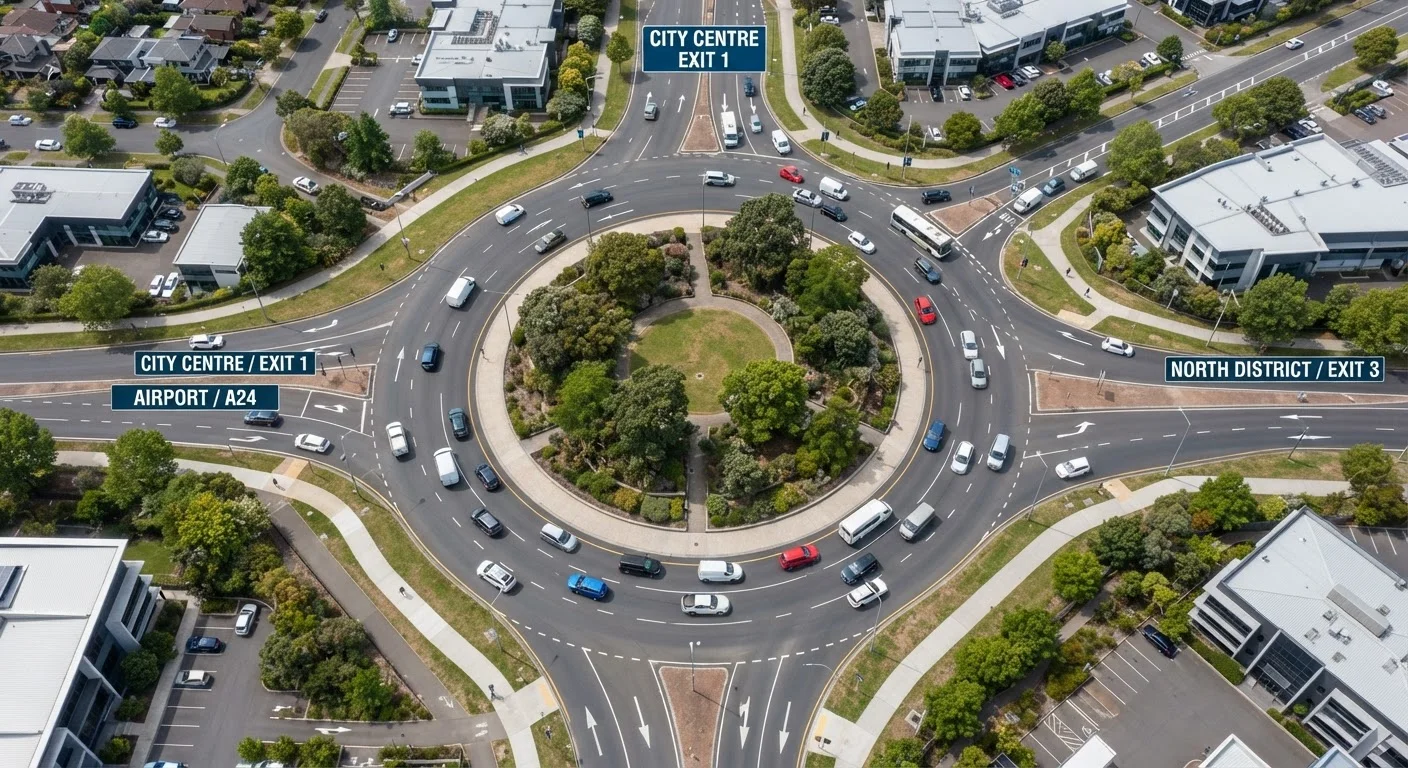
Photo: BridgeWish.com | Reliable Source Of Information editorial
Key Takeaways
- Yield to circulating traffic before entering a roundabout - never stop inside the circle unless emergency conditions require it.
- The zipper merge is the legally correct and safest way to handle a lane reduction; early merging is not more courteous.
- At four-way stops, arrival order and right-of-way rules - not assertiveness - determine who goes first.
- Unprotected left turns are among the most crash-prone maneuvers at signalized intersections; patience and full gap assessment are essential.
- Misreading road markings and yield signs at complex intersections causes preventable collisions every day.
Why These Intersections Cause So Much Confusion
Most drivers learn the basics of four-way stops and traffic lights, but roundabouts, zipper merges, and complex multi-lane intersections often receive only a paragraph or two in driver education. That gap shows up in real driving: intersections are among the most dangerous locations on any road, accounting for a disproportionate share of injury crashes nationally.
The confusion usually isn't about speed or distraction - it's about misunderstood rules. Drivers apply familiar logic ("biggest road goes first," "early movers get priority") to situations that operate on entirely different principles. Understanding exactly how each intersection type works closes that gap before it becomes a near-miss or worse.
What you will need
Roundabouts: Yield on Entry, Commit on Exit
A roundabout is a one-way circular intersection designed to keep traffic moving without the stop-and-wait cycle of a signal. Vehicles already inside the circle have the right of way. You yield before entering, not after.
Slow down and read the approach
As you approach a roundabout, reduce speed and scan the yield sign, lane markings, and any directional signs indicating which exit corresponds to which lane. Do this before you reach the yield line - not while you're entering.
Yield to circulating traffic, then enter smoothly
Stop or slow at the dashed yield line and wait for a clear gap in traffic already moving inside the circle. When the gap is confirmed, enter at a steady speed without hesitating or stopping mid-entry - abrupt stops at the entry point create rear-end risk from drivers behind you.
Signal your exit and exit in the correct lane
Activate your right turn signal as you pass the exit before your intended one. This signals to entering drivers that you are leaving the circle. Exit into the lane that corresponds to your entry lane - right-lane entry exits to the right lane of the outgoing road.
For multi-lane roundabouts, lane selection matters: use the right lane to take the first or second exit, and the left lane for exits further around the circle. Road markings inside and approaching roundabouts tell you which lane aligns with each exit - read them before you enter, not while you're circling.
Don't Stop Inside a Roundabout
Zipper Merges and Lane Reductions
When a lane is closing ahead - due to construction or a merge point - the instinct for many drivers is to move over immediately. Research from state transportation departments consistently shows this creates longer backups and increases rear-end collisions. The correct technique is the zipper merge: both lanes use their full available length, then drivers alternate one-for-one at the merge point, like the teeth of a zipper.
Drivers who stay in the closing lane until the designated merge point are not cutting - they are following the intended traffic design. Drivers in the continuing lane should expect this and create one gap at the merge point rather than blocking the closing lane out of frustration.
For a deeper look at where right-of-way confusion most commonly leads to crashes, see our guide on merging, yielding, and right-of-way.
Use Your Signal Early and Consistently
Four-Way Stops and Unprotected Left Turns
Four-way stops follow a strict priority order: first to stop, first to go. When two vehicles arrive simultaneously, the driver on the left yields to the driver on the right. When facing each other going straight, both may proceed. When one is turning left, they yield to oncoming straight-through traffic. These rules are fixed - they don't change based on vehicle size, road type, or who feels more assertive.
Unprotected left turns at signalized intersections operate differently: a green light grants permission to enter the intersection, not to complete the turn. You must wait for a gap in oncoming traffic before turning. This distinction - green means enter, not turn - is where many drivers make dangerous assumptions. Several traffic laws drivers routinely misunderstand cluster around exactly this scenario.
Yielding Is a Legal Requirement, Not a Courtesy
Urban intersections add complexity through pedestrian signals, bike lanes, and tighter timing windows. The risk profile of city driving differs substantially from highway driving - situational awareness at intersections is one of the sharpest differences between the two environments.
The content on this site is for informational purposes only and is not a substitute for professional advice. Always consult a qualified professional for guidance specific to your situation.