
Situational Awareness on the Road: Reading Traffic Before Problems Develop

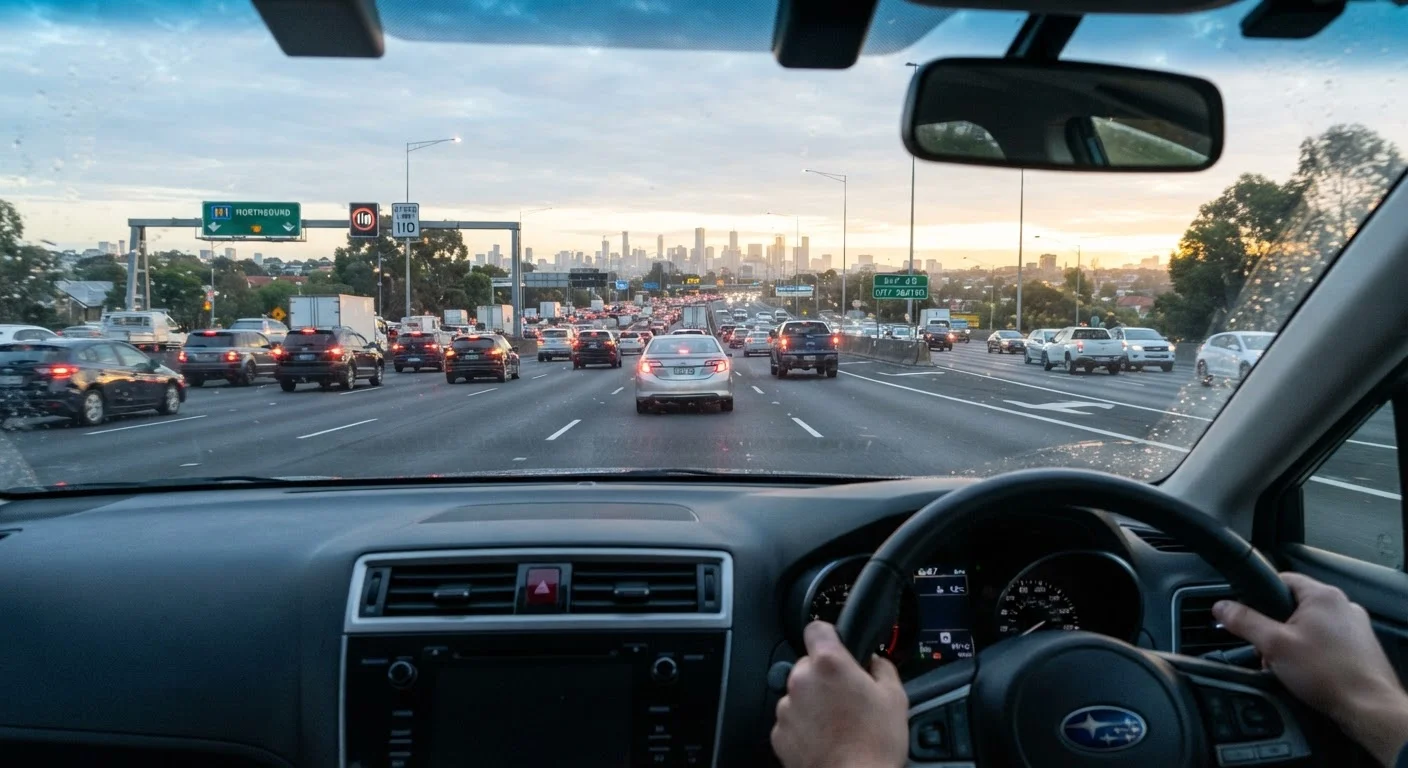
Photo: BridgeWish.com | Reliable Source Of Information editorial
Key Takeaways
- Situational awareness means continuously scanning and predicting traffic conditions, not just reacting to them.
- Maintaining proper following distance gives you time and space to respond before problems escalate.
- Identifying escape routes and problem drivers early reduces the likelihood of being caught in a collision.
- Minimizing distractions - including GPS fixation - preserves the mental bandwidth needed to read traffic accurately.
- Practiced scanning habits can be developed deliberately and improve measurably over time.
What Situational Awareness Actually Means Behind the Wheel
Situational awareness is the ability to perceive what is happening around your vehicle, understand what those conditions mean, and anticipate what is likely to happen next. It is not a passive activity. Experienced drivers are constantly building a mental picture of traffic: who is accelerating, which lane is thinning, whether the truck two cars ahead just touched the brakes.
This skill sits at the core of defensive driving - the ability to anticipate hazards before they become emergencies. The good news is that it can be learned and sharpened through deliberate habit, regardless of how long you have been driving.
“The goal of situational awareness is not to react faster - it is to need to react less. When you are reading the road correctly, most hazards are resolved before they require urgent action.”
— National Safety Council, U.S. nonprofit focused on eliminating preventable deaths
Core Practices for Reading Traffic Before It Turns Dangerous
The following habits form the foundation of strong situational awareness. Each one addresses a specific gap that causes otherwise avoidable crashes.
Scan far ahead, not just the vehicle directly in front of you.
Maintain a following distance that matches your actual stopping needs.
Identify problem drivers early and create space around them.
Check your mirrors every five to eight seconds to maintain a complete picture.
Always have a mental escape route available.
Limit cognitive distractions, not just physical ones.
Common Situations That Demand Elevated Awareness
Some driving environments compress reaction time and concentrate risk. Intersections are among the most demanding. Drivers who enter on a stale green light or assume cross-traffic has stopped are relying on expectation rather than observation. For a detailed look at intersection-specific risks, see navigating intersections safely.
Merging zones, construction corridors, and wet or reduced-visibility roads each require a recalibration of following distance and scan frequency. In adverse weather especially, the gap between what you can see and what you need to see to stop safely narrows dramatically - a situation covered in depth in our guide on driving in rain, snow, or fog.
One underappreciated threat to awareness is GPS fixation - glancing repeatedly at a screen instead of reading traffic. The convenience of turn-by-turn navigation carries real trade-offs that are worth understanding before you rely on it heavily. Weigh those carefully using our breakdown of the pros and cons of GPS navigation.
94%
Crashes attributed to human error
According to NHTSA research, roughly 94 percent of serious crashes involve a critical reason attributed to the driver, including recognition errors such as inattention and distraction.
~3 sec
Minimum safe following distance
The three-second rule is widely taught in driver education programs as the baseline gap needed to identify a hazard and bring a vehicle to a controlled stop under normal conditions.
Quick Wins You Can Apply on Your Next Drive
Awareness habits do not require specialized training to start building. The actions below are practical and immediately applicable, whether you are commuting across town or heading out on the highway.
Drivers at different experience levels face different awareness challenges. New drivers are statistically more likely to focus narrowly on the immediate task and miss the broader traffic picture - a pattern detailed in our guide on situations where new drivers make dangerous errors. Older or returning drivers may find that adjustments to scan speed and night-vision limitations require fresh strategies, covered in our overview of safe driving at every life stage.
Build Awareness as a Pre-Drive Habit
The content on this site is for informational purposes only and is not a substitute for professional advice. Always consult a qualified professional for guidance specific to your situation.