
The Pros and Cons of Relying on GPS Navigation While Driving

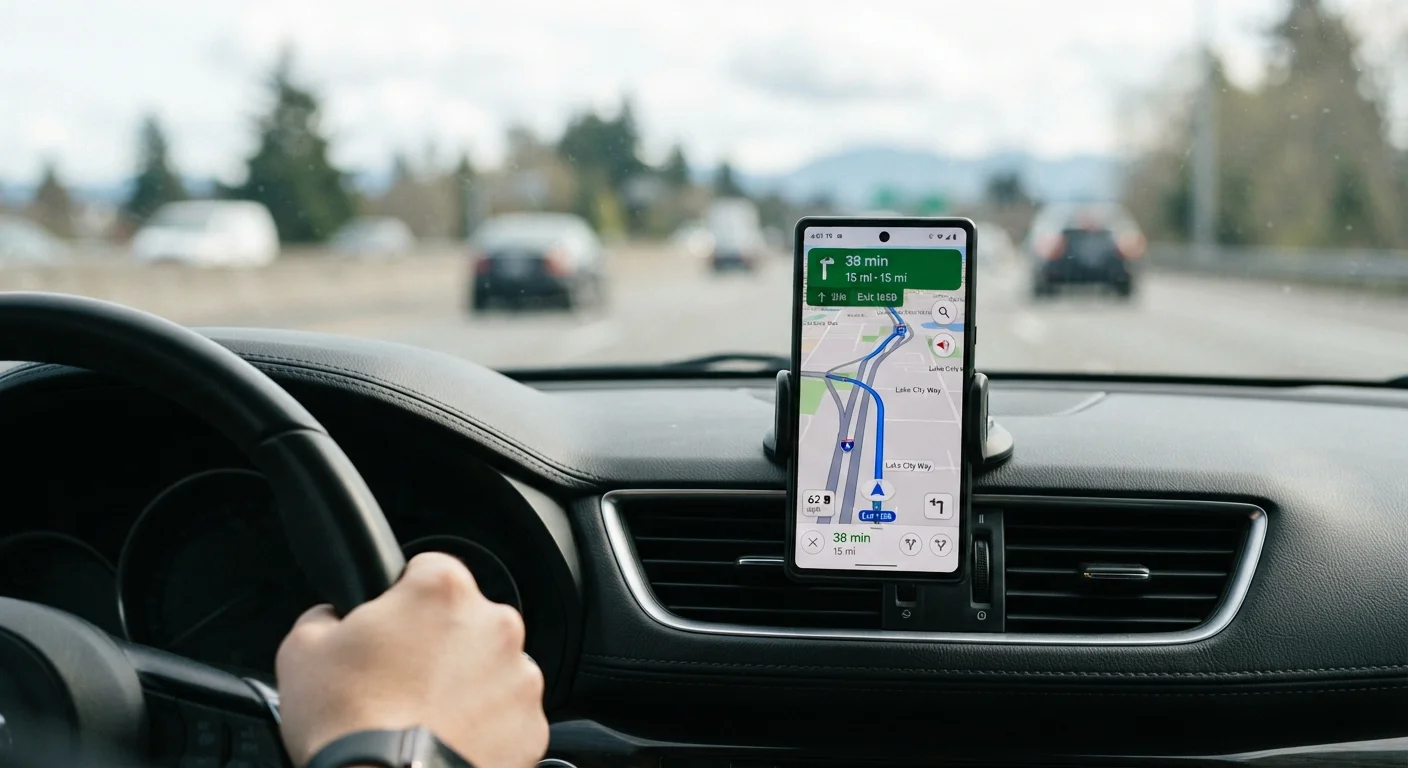
Photo: BridgeWish.com | Reliable Source Of Information editorial
Key Takeaways
- GPS navigation reduces wrong turns and helps drivers find efficient routes, especially in unfamiliar areas.
- Over-reliance on GPS can erode spatial awareness and create dangerous split-second distractions.
- Hands-free, voice-guided navigation is significantly safer than glancing at a screen while driving.
- GPS data is not always current - road closures, speed limits, and hazards may not be reflected in real time.
- Treating GPS as a tool rather than an authority helps drivers stay safer and more situationally aware.
Reduces navigation stress in unfamiliar areas
Real-time routing allows drivers to focus on vehicle control rather than deciphering paper maps or memorizing directions. This is especially valuable in dense urban environments or when traveling in an unfamiliar city.
Live traffic data helps avoid congestion
Many navigation apps pull real-time traffic information and suggest faster alternate routes. This can meaningfully reduce time spent in stop-and-go conditions, which also lowers rear-end collision exposure.
Supports safer lane positioning in advance
When drivers know a complex interchange or exit is approaching, they can position the vehicle earlier and more calmly rather than making abrupt last-second lane changes.
Voice guidance keeps eyes on the road
Audio-only navigation prompts allow drivers to receive turn-by-turn guidance without diverting their gaze from the road ahead - a significant safety advantage over older visual-only approaches.
Useful backup during detours or road closures
When a route is blocked unexpectedly, GPS can quickly calculate an alternative without the driver needing to pull over and problem-solve. This is particularly useful for commercial drivers or those covering unfamiliar long distances.
Screen interaction creates dangerous visual distraction
Tapping, zooming, or re-entering a destination while driving diverts eyes and hands from the primary task. Even a brief glance at a navigation screen carries measurable crash risk at highway speeds.
Erodes spatial memory and navigational independence
Consistent GPS reliance has been associated in research with reduced ability to form mental maps of familiar areas. Drivers who lose signal or encounter a dead zone in an unfamiliar location may struggle to adapt.
GPS data can be outdated or inaccurate
Road closures, newly posted speed limit changes, construction zones, and rerouted one-way streets may not appear in navigation data immediately. Blindly following GPS instructions into a closed road or wrong-way situation is a documented hazard.
Late cues can prompt abrupt, dangerous maneuvers
If a navigation prompt fires too close to a turn or exit, drivers may react with sudden braking or lane changes that surprise surrounding traffic. This risk is amplified on multi-lane roads at higher speeds.
Reduces active engagement with the driving environment
Drivers who follow GPS passively may stop scanning intersections proactively, anticipating traffic flow, or reading road signs - all habits that are central to safe, attentive driving.
How GPS Navigation Has Changed the Way We Drive
Turn-by-turn navigation has become one of the most widely used features in modern driving. Whether through a built-in infotainment system or a smartphone app mounted to the dash, the vast majority of US drivers use GPS regularly. The technology has reshaped how people approach unfamiliar routes, commutes, and road trips alike.
But widespread adoption doesn't mean risk-free use. GPS navigation interacts directly with driver attention - and attention is among the most finite resources behind the wheel. Understanding both the genuine benefits and the documented trade-offs helps drivers make smarter decisions about when and how to use these tools.
Reduces navigation stress in unfamiliar areas
Real-time routing allows drivers to focus on vehicle control rather than deciphering paper maps or memorizing directions. This is especially valuable in dense urban environments or when traveling in an unfamiliar city.
Live traffic data helps avoid congestion
Many navigation apps pull real-time traffic information and suggest faster alternate routes. This can meaningfully reduce time spent in stop-and-go conditions, which also lowers rear-end collision exposure.
Supports safer lane positioning in advance
When drivers know a complex interchange or exit is approaching, they can position the vehicle earlier and more calmly rather than making abrupt last-second lane changes.
Voice guidance keeps eyes on the road
Audio-only navigation prompts allow drivers to receive turn-by-turn guidance without diverting their gaze from the road ahead - a significant safety advantage over older visual-only approaches.
Useful backup during detours or road closures
When a route is blocked unexpectedly, GPS can quickly calculate an alternative without the driver needing to pull over and problem-solve. This is particularly useful for commercial drivers or those covering unfamiliar long distances.
The Real Downsides of GPS Dependency
The core problem with GPS navigation isn't the technology - it's the behavior it can encourage. Drivers who treat GPS as an authority rather than an aid often stop actively reading the road around them. That passive approach creates risk, particularly in situations where the app lags behind real-world conditions.
Distracted driving research consistently shows that even brief visual disengagement from the road - the kind that happens when glancing at a navigation screen - significantly increases collision risk. A driver looking at their phone for two seconds at 60 mph travels the length of nearly two car lengths without processing what's ahead.
GPS also contributes to a documented decline in spatial memory. Studies in cognitive psychology have found that people who rely heavily on turn-by-turn directions develop weaker mental maps of their surroundings over time. For everyday driving this may seem minor, but in emergency situations - a detour, a road closure, a lost signal - drivers who lack a mental model of their area are less equipped to adapt.
Screen interaction creates dangerous visual distraction
Tapping, zooming, or re-entering a destination while driving diverts eyes and hands from the primary task. Even a brief glance at a navigation screen carries measurable crash risk at highway speeds.
Erodes spatial memory and navigational independence
Consistent GPS reliance has been associated in research with reduced ability to form mental maps of familiar areas. Drivers who lose signal or encounter a dead zone in an unfamiliar location may struggle to adapt.
GPS data can be outdated or inaccurate
Road closures, newly posted speed limit changes, construction zones, and rerouted one-way streets may not appear in navigation data immediately. Blindly following GPS instructions into a closed road or wrong-way situation is a documented hazard.
Late cues can prompt abrupt, dangerous maneuvers
If a navigation prompt fires too close to a turn or exit, drivers may react with sudden braking or lane changes that surprise surrounding traffic. This risk is amplified on multi-lane roads at higher speeds.
Reduces active engagement with the driving environment
Drivers who follow GPS passively may stop scanning intersections proactively, anticipating traffic flow, or reading road signs - all habits that are central to safe, attentive driving.
GPS and Situational Awareness: A Complicated Relationship
One of the subtler risks of GPS dependency is what it does to situational awareness - the ongoing mental process of scanning traffic, predicting hazards, and positioning the vehicle proactively. When a driver outsources navigation decisions entirely to an app, their cognitive bandwidth can shift away from reading the road and toward following instructions.
This matters most in complex driving environments. Roundabouts, zipper merges, and multi-lane intersections already demand high attention loads. When a driver is simultaneously processing a GPS voice prompt, watching for the right lane, and reading signage, the cognitive demand compounds quickly.
When GPS Signal Fails or Lags
The risk profile also shifts depending on driving environment. Highway and city driving pose different navigational challenges - urban grids are more forgiving of missed turns, while high-speed highway interchanges leave little margin for last-second lane changes prompted by a late GPS cue.
Using GPS More Safely: Practical Habits That Matter
The goal isn't to abandon GPS - it's to use it in ways that keep attention where it belongs: on the road. A few consistent habits make a meaningful difference.
- Set the route before moving. Entering a destination while driving is one of the most common and preventable GPS-related distractions. Program navigation while parked.
- Use voice guidance. Audio cues allow drivers to keep their eyes forward. Visual-only navigation requires repeated glances at the screen.
- Mount the device at eye level. A phone on the passenger seat or in a cupholder forces larger head movements and more time off the road ahead.
- Don't make sudden maneuvers for GPS cues. If a turn is missed, continue safely and let the app reroute. A missed exit is always recoverable; a sudden lane change at speed may not be.
- Cross-reference with road signage. GPS data can lag. Signs reflect real-world conditions in real time.
New drivers in particular benefit from developing some baseline navigational independence alongside GPS use - building spatial awareness early prevents over-reliance from taking root during the formative stages of driving experience.
~9%
US crashes linked to distracted driving annually
According to the National Highway Traffic Safety Administration (NHTSA), distraction is a contributing factor in a significant share of reported traffic crashes each year, with device interaction among the noted causes.
2 sec
Eyes-off-road time that meaningfully raises crash risk
NHTSA research indicates that taking eyes off the road for two or more seconds approximately doubles crash risk - the typical duration of a glance at a navigation screen.
The content on this site is for informational purposes only and is not a substitute for professional advice. Always consult a qualified professional for guidance specific to your situation.