
Driving in Rain, Ice, and Snow: Adjusting for Each Condition

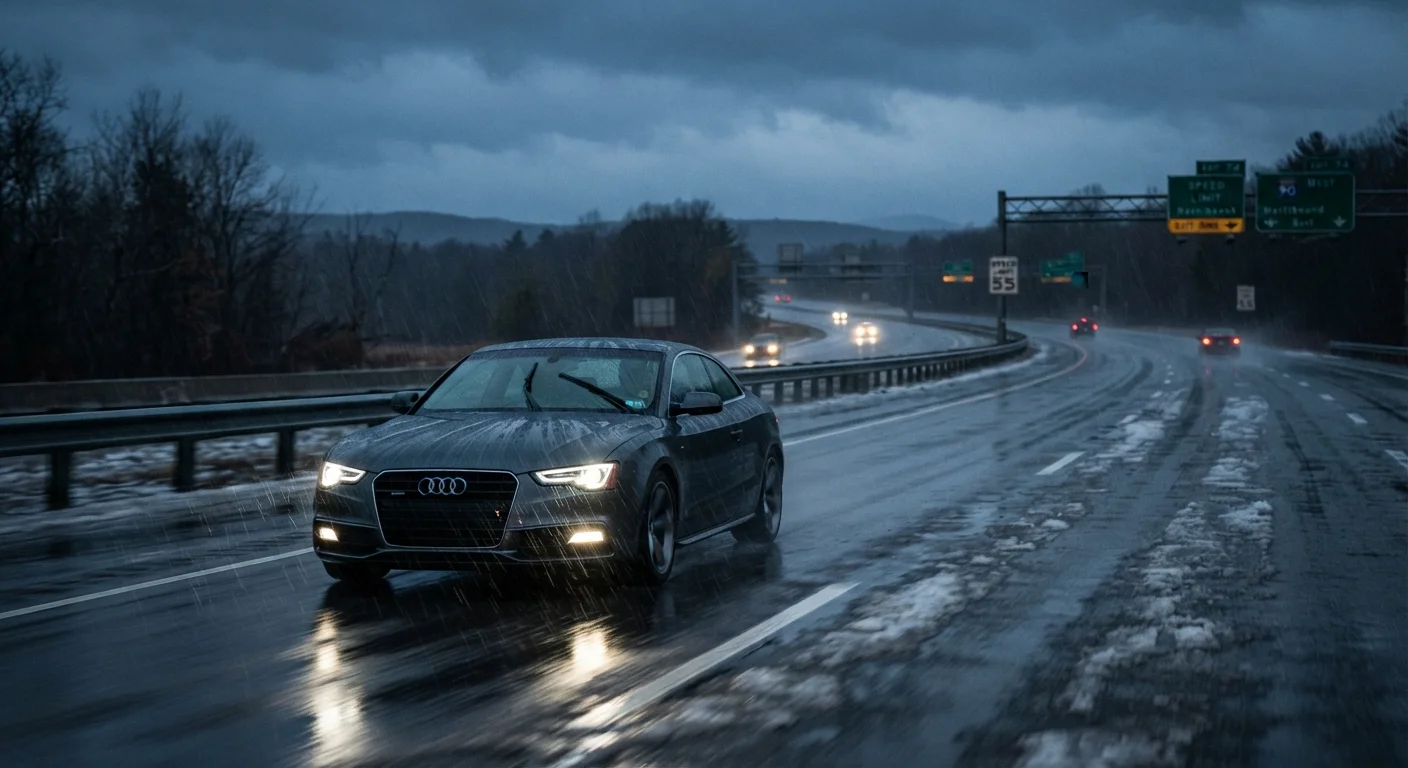
Photo: BridgeWish.com | Reliable Source Of Information editorial
Key Takeaways
- Rain reduces tire grip and visibility - increase following distance and slow down gradually.
- Ice is the most dangerous surface condition, offering near-zero traction with little visual warning.
- Snow requires slower speeds, smoother inputs, and awareness of plowed vs. unplowed lane differences.
- Each weather condition changes braking distance significantly - anticipate stops earlier than usual.
- Vehicle preparation, such as proper tires and working wipers, is as important as driving technique.
Why Each Weather Condition Is a Different Problem
Drivers often group rain, ice, and snow under the umbrella of "bad weather," but each one fundamentally changes road physics in its own way. Treating them interchangeably leads to misjudged speeds, wrong responses to skids, and avoidable crashes.
Rain primarily reduces tire-to-road friction and degrades visibility. Ice strips away nearly all traction and can be invisible. Snow varies dramatically - fresh powder behaves differently than packed snow or slush - and it compounds visibility loss with unpredictable surface depth changes. The right technique in one condition can be the wrong move in another.
For a broader look at how environmental factors change your risk exposure, see our guide on adapting to all adverse weather conditions. This article focuses specifically on comparing rain, ice, and snow so you know what to expect from each.
| Rain | Ice | Snow | |
|---|---|---|---|
| Traction loss severity | Moderate (~30% reduction) | Severe (up to 90% reduction) | Moderate to high (varies with depth) |
| Visibility impact | Moderate - rain obscures | Low - often invisible hazard | High - heavy snowfall whiteout risk |
| Primary hazard | Hydroplaning | Black ice, no grip | Understeer, deep drifts |
| Braking distance vs. dry road | Up to 2x longer | Up to 10x longer | 3-5x longer typically |
| Key driving adjustment | Increase following distance | Near-stop speeds, feather brakes | Smooth throttle, winter tires |
| Vehicle prep priority | Wiper blades, tire tread | Check all-season vs. winter tires | Snow cleared from roof, winter tires |
Driving in Rain: What Changes and Why
Rain is the most frequently encountered hazardous condition for US drivers. Wet pavement can reduce tire traction by as much as one-third compared to dry roads, with the worst friction occurring in the first few minutes of rain - when oil residue on the road surface mixes with water before it's washed away.
Hydroplaning (when a tire rides on a film of water rather than the road surface) becomes a risk above approximately 35 mph, especially with worn tires. Signs include a sudden lightness in steering and a floating sensation. If it happens, ease off the accelerator gently - do not brake hard or steer sharply.
- Increase following distance to at least 4-6 seconds from the vehicle ahead.
- Reduce speed progressively, not abruptly, when entering wet sections.
- Use headlights - many states require them when wipers are running.
- Avoid cruise control on wet roads, as it can delay your ability to respond to wheel spin.
Check Your Tires Before Rain Season
Driving on Ice: The Highest-Risk Surface
Ice - particularly black ice (a thin, nearly transparent layer that blends with the road) - is the most dangerous surface condition a driver can encounter. Braking distances on ice can be up to ten times longer than on dry pavement. Even at low speeds, a vehicle on ice has almost no ability to steer or stop predictably.
Ice forms most readily on bridges, overpasses, and shaded stretches of road, even when the surrounding pavement appears dry. Temperatures hovering just above and below 32°F are particularly treacherous because freeze-thaw cycles create intermittent icy patches.
- Drive at a crawl on suspected icy surfaces - even 5-10 mph can be too fast.
- Apply brakes with light, steady pressure; if your vehicle lacks ABS, use gentle threshold braking.
- If you begin to slide, steer gently in the direction you want the front of the vehicle to go - avoid overcorrecting.
- Allow significantly more time for trips, and consider whether travel is necessary at all.
Good situational awareness is especially critical on icy roads - spotting a bridge approach or a shaded corner early gives you time to slow before reaching it.
Black Ice Gives Almost No Warning
Driving in Snow: Technique and Tire Decisions
Snow introduces challenges that blend low traction with reduced visibility and obscured lane markings. Unlike ice, snow gives drivers some visual cues - you can usually see it. But depth, compaction, and temperature all affect how it behaves under your tires.
Fresh powder is generally more forgiving than packed or icy snow, but deep accumulation can cause the vehicle to push straight in turns (understeer) or require more throttle to maintain momentum. Stopping in deep snow often means the vehicle plowing to a halt rather than braking cleanly.
- Winter tires - not just all-season tires - make a measurable difference in snow traction and braking at temperatures below 45°F.
- Accelerate and decelerate gradually; sudden throttle inputs spin wheels and cause loss of direction.
- Stay in the tire tracks of vehicles ahead when possible - compressed snow offers more grip than fresh accumulation.
- Clear all snow from the vehicle before driving, including the roof - snow sliding onto your windshield or another driver's is a genuine hazard.
Preparing your vehicle before winter arrives is just as important as in-the-moment technique. Our seasonal car care guide covers what to check before cold weather sets in.
Shared Principles Across All Three Conditions
While rain, ice, and snow each require specific responses, several habits apply across all adverse weather driving:
- Slow down more than feels necessary. Speed limits are set for ideal conditions; they do not account for wet, icy, or snowy surfaces.
- Increase following distance substantially. The two-second rule for dry roads becomes four seconds or more in rain, and even further on ice or snow.
- Smooth inputs win. Jerky steering, hard braking, and sudden acceleration destabilize the vehicle in all low-traction conditions.
- Know your vehicle's limits. AWD and 4WD improve traction but do not improve braking on slippery surfaces - a common and dangerous misconception.
The same risk-awareness principles that apply to changing road environments - like those explored in our piece on highway vs. city driving risk profiles - apply here: understanding the specific hazards ahead of time is what allows you to respond rather than react.
~21%
US crashes linked to weather conditions
According to the Federal Highway Administration, approximately 21% of all US vehicle crashes are weather-related annually.
10x
Longer braking distance on ice vs. dry road
Safety researchers estimate that stopping distances on ice can be up to ten times greater than on dry pavement at the same speed.
70%
Weather crashes occurring on wet pavement
The FHWA reports that roughly 70% of weather-related crashes happen on wet roads, making rain the most statistically common hazard.
The content on this site is for informational purposes only and is not a substitute for professional advice. Always consult a qualified professional for guidance specific to your situation.