
What the Road Signs You Ignore Are Actually Telling You

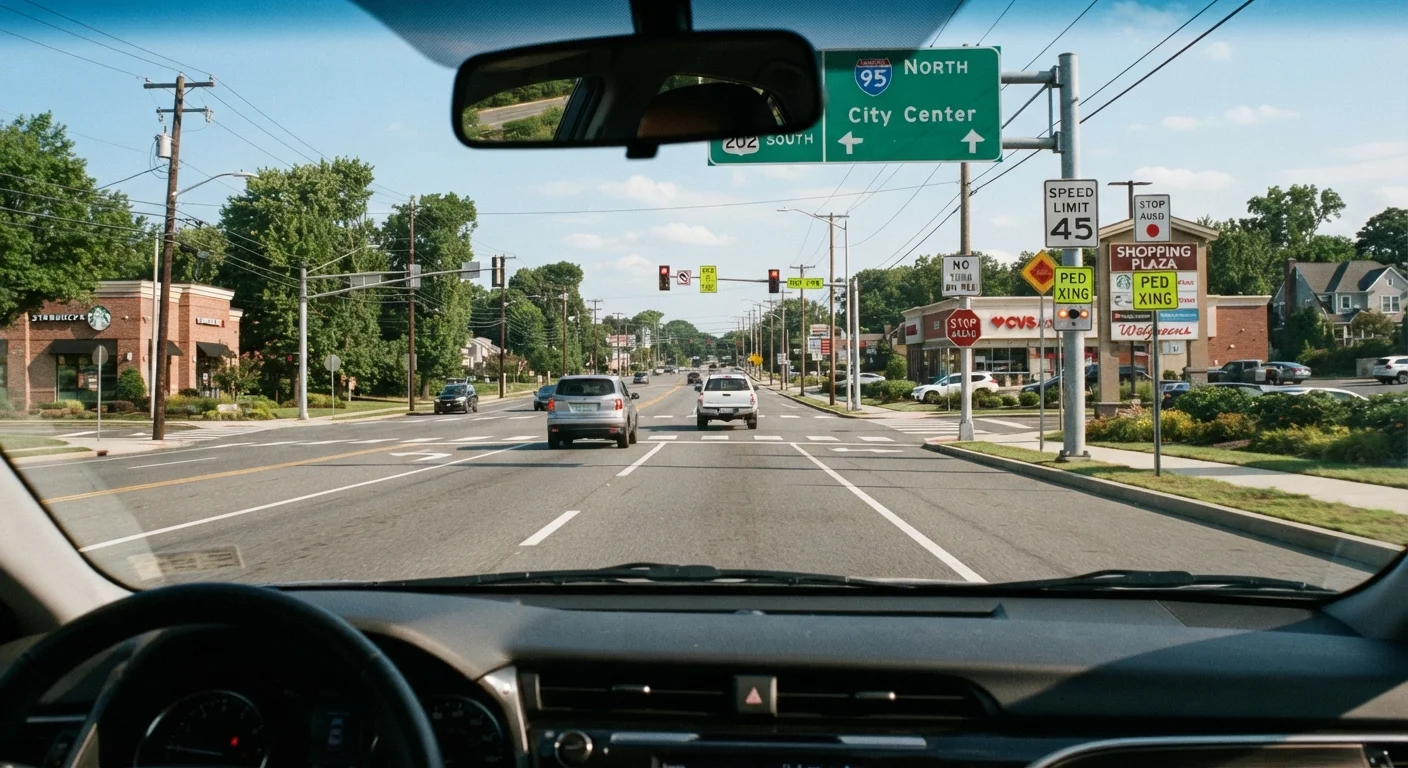
Photo: BridgeWish.com | Reliable Source Of Information editorial
Signs Drivers Routinely Misread or Miss
Most drivers learn traffic signs well enough to pass a licensing exam and then promptly stop thinking about them. The result: signs that carry real legal weight get treated as background scenery. Whether it's a regulatory sign at an intersection or a warning sign on an unfamiliar highway, misreading these markers contributes to preventable collisions every year.
| Sign shape: octagon | Stop - full stop required by law (MUTCD (Manual on Uniform Traffic Control Devices)) |
| Sign shape: triangle (inverted) | Yield - give the right of way (MUTCD) |
| Sign shape: diamond | Warning - hazard or road change ahead (MUTCD) |
| Sign shape: rectangle (vertical) | Regulatory - legal requirements (MUTCD) |
| Sign color: orange | Temporary traffic control / work zones (MUTCD) |
| Sign color: fluorescent yellow-green | School and pedestrian crossings (MUTCD) |
The Federal Highway Administration classifies road signs into three primary categories: regulatory (what you must or must not do), warning (what hazards or changes lie ahead), and informational/guide (navigation and services). Understanding which category a sign falls into tells you immediately how urgent its message is. For a deeper look at how these categories interact with traffic law, see our guide to commonly misunderstood traffic laws.
Regulatory Signs
"Do Not Pass" vs. "No Passing Zone" pennant: Both prohibit overtaking, but the yellow pennant-shaped sign specifically marks the beginning of a no-passing zone on two-lane roads. Crossing a solid yellow centerline to pass in these zones is illegal in every US state.
"Keep Right Except to Pass": Common on multi-lane highways, this sign is legally enforceable in most states. Traveling in the left lane when not actively passing is not just a courtesy issue - in many states, it is a moving violation.
"Yield" at freeway on-ramps: Merging traffic must yield to highway traffic. The on-ramp is an acceleration lane, not a guaranteed entry point. How merges actually work is a topic that trips up even experienced drivers.
Warning Signs, Pavement Markings, and Specialized Symbols
Warning signs are diamond-shaped and yellow (or orange in work zones). They alert you to conditions ahead - not current rules, but upcoming situations that demand a change in behavior.
Regulatory sign
A sign that communicates a legal requirement or prohibition. Compliance is mandatory; violations can result in fines, points on a license, or criminal charges depending on the infraction.
Warning sign
A diamond-shaped sign (typically yellow or orange) that alerts drivers to a potential hazard, road change, or condition ahead. These signs call for increased caution, not a specific legal action.
Advisory speed
A recommended speed for a specific hazard - such as a sharp curve - posted as a supplemental tab beneath a warning sign. It is not the legal speed limit but reflects the safe operating speed for that condition.
No-passing zone
A stretch of road, marked by a pennant-shaped sign or solid yellow centerlines, where overtaking another vehicle is prohibited by law due to limited visibility or road width.
Box junction
A crosshatched area marked on pavement at intersections indicating that drivers must not enter unless their exit is clear. Stopping in the box obstructs cross traffic and is a violation in many states.
Work zone (active)
A section of roadway where construction, maintenance, or utility work is underway. Active work zones are marked with orange signs; fines for violations in these areas are typically enhanced by state law.
Frequently Ignored Warning Signs
- "Advisory Speed" tab below a curve warning: This is not the posted speed limit - it is the speed at which engineers determined a vehicle can safely navigate that curve. Exceeding it in wet conditions significantly increases rollover and skid risk.
- "Divided Highway Ends": This sign tells drivers the road is transitioning from a divided highway (with a median) to a two-lane undivided road. Head-on collision risk increases sharply here; adjust lane position and speed accordingly.
- "Low Clearance" bridge signs: These give a specific height in feet and inches. Ignoring them in a tall vehicle - a moving truck or RV - can result in structural damage to the vehicle and the bridge, as well as serious safety hazards.
Pavement Markings
White lines separate traffic moving in the same direction; yellow lines separate opposing traffic. A solid white line discourages lane changes (e.g., near intersections). A double solid yellow prohibits passing in both directions. Crosshatched pavement in an intersection marks a box junction - entering when your exit is blocked is illegal in many jurisdictions and a leading cause of gridlock. See our reference on traffic signs and road markings drivers overlook for a complete pavement markings guide.
School and Work Zone Signs
Fines in active school and construction zones are typically doubled under state law. "When Flashing" below a school speed limit sign means the reduced speed applies only when the beacons are active - but "School Zone" signs without flashers may still impose speed limits during posted hours. Always read the full sign assembly, not just the speed number. For safe navigation through complex intersections near school and work zones, consult our guide to navigating intersections safely.
This article is for general informational and educational purposes only. Always consult your state's official driver manual and current traffic statutes for legally binding guidance in your jurisdiction.
The content on this site is for informational purposes only and is not a substitute for professional advice. Always consult a qualified professional for guidance specific to your situation.