
Essential Kitchen Tools for Someone Just Getting Started

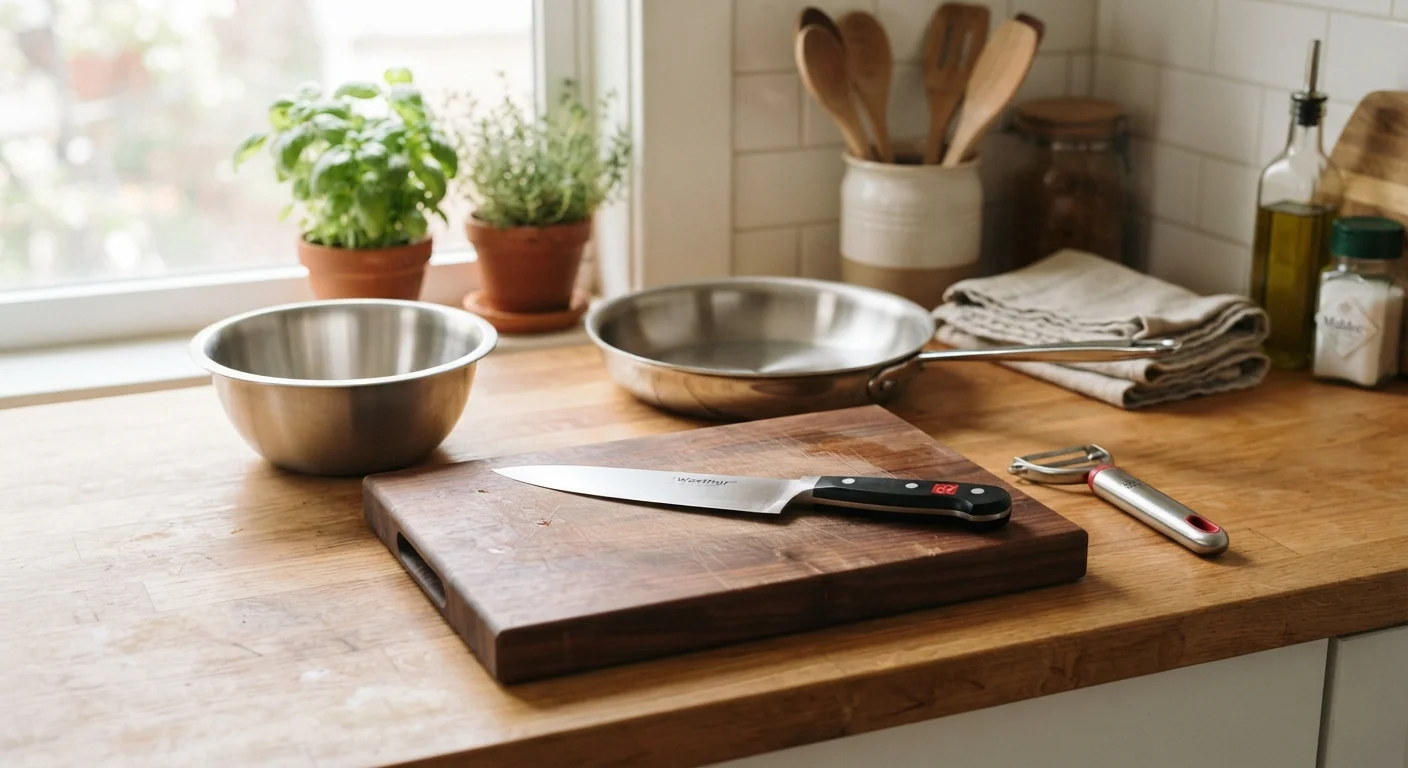
Photo: BridgeWish.com | Reliable Source Of Information editorial
Key Takeaways
- A single sharp chef's knife handles the vast majority of prep work in a beginner's kitchen.
- A heavy-bottomed skillet and a medium saucepan cover nearly every everyday cooking method.
- Measuring cups, a cutting board, and a box grater are low-cost tools with high daily utility.
- Investing in a few quality fundamentals beats owning a drawer full of single-use gadgets.
- Good tools reduce frustration and help beginners build cooking confidence faster.
Start Small, Cook More
One of the most common mistakes new home cooks make is buying too much at once — a full knife block, every pan size, gadgets for tasks they haven't tried yet. The result is cluttered drawers and tools that never get used. A more practical approach: start with a short list of genuinely versatile pieces that cover the widest range of everyday tasks.
The tools below aren't trendy accessories. They're the workhorses that professional cooks rely on every single day, scaled down to what a beginner actually needs to get dinner on the table. Once you're comfortable with these, you'll have a much clearer sense of what — if anything — you actually need next.
Before you dive in, it's worth pairing the right tools with the right ingredients. Our pantry staples guide covers the foundational ingredients that make weeknight cooking flexible and stress-free.
An 8-Inch Chef's Knife
If you own one knife, make it an 8-inch chef's knife. Its curved blade lets you rock through herbs, its length handles large vegetables, and its weight gives you control over tougher cuts. A sharp chef's knife is also significantly safer than a dull one — a blade that grips rather than glides is far more likely to slip. Learn more about why edge maintenance matters in our article on keeping a knife sharp.
One sharp chef's knife handles more prep tasks than any other single tool you'll own.
A Large Wooden or Plastic Cutting Board
Your knife is only as useful as the surface beneath it. A large cutting board — at least 12 by 18 inches — gives you room to work without ingredients falling off the edges. Wooden boards are gentle on knife edges; plastic boards are easier to sanitize for raw meat. Either works well; many cooks keep one of each. Place a damp towel underneath to stop it sliding.
A large, stable cutting board makes prep safer and more efficient for every ingredient.
A 10- or 12-Inch Heavy-Bottomed Skillet
Sautéing, searing, scrambling eggs, making pan sauces — a good skillet does all of it. Cast iron holds heat exceptionally well and goes from stovetop to oven, but it requires some maintenance. Stainless steel is more forgiving and dishwasher-safe. A nonstick option is the easiest for beginners working with eggs or fish. Whichever material you choose, weight matters: thin pans create hot spots that burn food unevenly.
A heavy-bottomed skillet is the single most versatile pan in any beginner's kitchen.
A 3- to 4-Quart Saucepan with Lid
Pasta, rice, soups, sauces, blanched vegetables — a medium saucepan with a tight-fitting lid covers an enormous range of everyday cooking. The lid traps steam and speeds up boiling, which matters more than it sounds on a busy weeknight. A 3- to 4-quart size is the practical sweet spot: big enough for a family portion, small enough to heat evenly and store easily.
A lidded saucepan handles boiling, simmering, and sauce-making — three of cooking's core tasks.
Dry and Liquid Measuring Tools
Cooking is more forgiving than baking, but accurate measurements still matter — especially when you're learning a recipe for the first time. Dry measuring cups (the stackable kind you level off) work for flour, rice, and spices. A clear liquid measuring cup with a spout handles stocks, water, and oils accurately. A set of measuring spoons covers both. These are among the lowest-cost, highest-utility tools in the kitchen.
Accurate measuring tools remove guesswork and help beginners replicate results consistently.
A Wooden Spoon or Silicone Spatula
You need something to stir with that won't scratch your pans or melt under heat. A wooden spoon is virtually indestructible and safe on any surface. A flexible silicone spatula does double duty — scraping bowls clean and folding ingredients together. Both are cheap enough to own several of. Avoid metal utensils on nonstick surfaces, which can damage the coating.
A wooden spoon or silicone spatula protects your pans and handles almost any stirring task.
A Colander
Draining pasta, rinsing canned beans, washing produce — a colander earns its counter space several times a week. A stainless steel version is the most durable and easy to clean; look for fine-enough holes that small grains like rice or quinoa won't fall through. This is one tool that has no real workaround; trying to drain a pot of boiling water by tipping the lid slightly is both frustrating and risky.
A colander handles draining and rinsing tasks safely — there's no practical substitute for it.
A Box Grater
A four-sided box grater grates hard cheeses, zests citrus, shreds vegetables, and slices thin strips of soft cheese — four distinct functions from one tool. The coarse side handles cheddar and carrots; the fine side works for Parmesan and ginger. It stores flat and costs very little. For beginner cooks who aren't yet sure whether they need a dedicated zester or mandoline, a box grater handles both jobs serviceably well.
A box grater delivers four different cutting functions at a fraction of the cost of separate tools.
Build From Here
With these eight tools in place, you can sauté vegetables, simmer soups, roast proteins, and prep almost any ingredient a recipe calls for. That's a substantial foundation. Resist the urge to add specialized gadgets until you've cooked enough to know there's a real gap — most beginner kitchens need practice more than they need more equipment.
Quality Over Quantity Every Time
Once your toolkit is sorted, the next step is learning to use it well. Foundational knife skills make prep faster and safer, and our kitchen readiness checklist helps you set up properly before every session. For a bigger-picture view of building a functional cooking space, see our guide on stocking a kitchen for nutritious everyday cooking.
The content on this site is for informational purposes only and is not a substitute for professional advice. Always consult a qualified professional for guidance specific to your situation.