
Whole Foods vs. Ultra-Processed Foods: Understanding the Difference

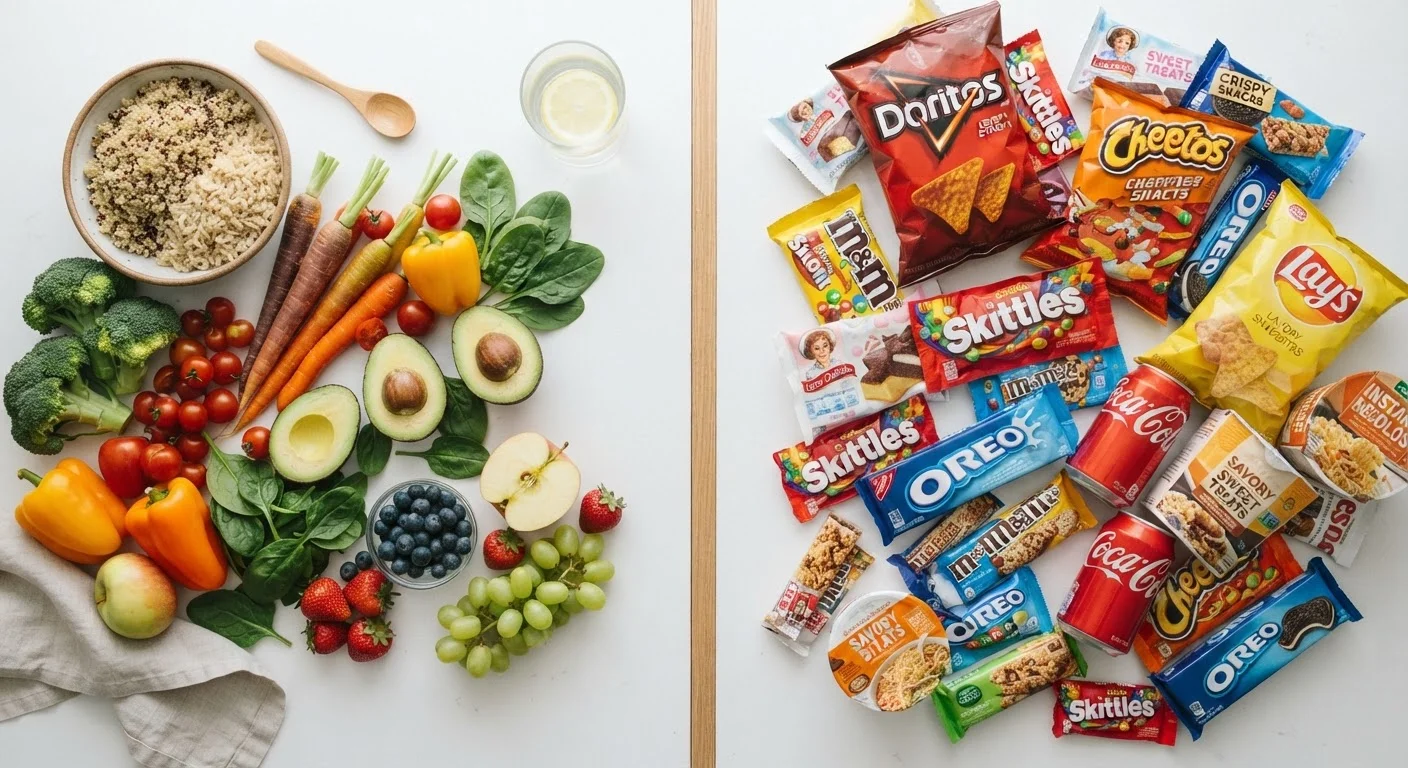
Photo: BridgeWish.com | Reliable Source Of Information editorial
Key Takeaways
- Whole foods are minimally altered from their natural state and retain most original nutrients.
- Ultra-processed foods are industrially formulated with additives not found in home kitchens.
- The NOVA classification system groups foods into four categories based on degree of processing.
- Research links high ultra-processed food intake to increased risk of several chronic health conditions.
- Not all packaged foods are ultra-processed — minimally processed items can fit a balanced diet.
- Reading ingredient lists, not just nutrition labels, is the most reliable way to identify ultra-processed foods.
How Researchers Define These Two Categories
The terms "whole food" and "ultra-processed food" sound self-explanatory, but nutrition researchers apply specific definitions that go beyond common sense. Understanding those definitions is what makes the distinction genuinely useful at the grocery store.
A whole food is any food consumed in — or very close to — its natural state. Think fresh broccoli, a raw walnut, a plain chicken breast, or brown rice. Minimal processing, such as washing, cutting, or cooking, doesn't disqualify a food from this category. What matters is that no significant substances have been added or removed. Distinguishing whole foods from all processed foods is a useful first step before narrowing in on the ultra-processed end of the spectrum.
Ultra-processed foods are defined most rigorously by the NOVA classification system, developed by researchers at the University of São Paulo. NOVA sorts foods into four groups based on the extent and purpose of processing — not nutrient content alone. Ultra-processed products (Group 4) are industrial formulations that typically contain ingredients you wouldn't find in a standard home kitchen: emulsifiers, artificial flavors, color stabilizers, hydrogenated oils, and high-fructose corn syrup. Common examples include packaged cookies, flavored chips, reconstituted meat products, and many carbonated soft drinks.
Not All Processing Is Equal
Side-by-Side: How They Compare Across Key Dimensions
Comparing whole foods and ultra-processed foods across specific criteria reveals why the distinction matters beyond simple calorie counting.
| Criterion | Whole Foods | Ultra-Processed Foods |
|---|---|---|
| Definition | Minimally altered from natural state | Industrially formulated with multiple additives |
| Typical ingredients | One or few recognizable ingredients | Long list, including emulsifiers and artificial flavors |
| Fiber content | Generally intact and high | Often removed or added back synthetically |
| Micronutrient retention | Naturally occurring vitamins and minerals | Often fortified to compensate for processing losses |
| Palatability engineering | None — flavor is inherent | Formulated for maximum appeal and craving |
| Shelf life | Short to moderate | Extended through preservatives and packaging |
| NOVA classification | Group 1 (unprocessed or minimally processed) | Group 4 (ultra-processed) |
| Health research association | Linked to lower chronic disease risk | Associated with higher chronic disease risk |
One often-overlooked point: nutrient labels alone won't tell you which category a food belongs to. An ultra-processed product can be fortified to display impressive numbers for vitamins and fiber, while still containing a long list of industrial additives. The ingredient list — specifically its length and recognizability — is a more reliable guide. Our article on reading nutrition labels and ingredient lists walks through exactly what to look for.
What the Research Actually Says
A growing body of observational research — including large cohort studies in Europe, the United States, and Brazil — associates high ultra-processed food consumption with elevated risks of cardiovascular disease, type 2 diabetes, obesity, and certain cancers. A 2019 study published in The BMJ found that each 10-percentage-point increase in ultra-processed food in the diet was associated with a meaningful increase in all-cause mortality risk.
58%
Share of calories from ultra-processed foods in average US diet
Research published in BMJ Open estimated that ultra-processed foods account for approximately 58% of caloric intake among US adults.
+12%
Associated increase in cancer risk per 10% rise in ultra-processed food share
A large prospective cohort study published in The BMJ (2018) found this association in a French adult population, though causality has not been established.
4 groups
Food categories in the NOVA classification system
The NOVA framework, developed at the University of São Paulo, organizes all foods by extent and purpose of processing rather than nutrient content.
It's important to note these are associations, not proven causal relationships. Researchers acknowledge that people who eat more ultra-processed foods may also have other lifestyle factors — lower income, less sleep, higher stress — that independently affect health outcomes. Randomized controlled trial evidence in this area remains limited. That said, the consistency of findings across multiple large populations has prompted many public health bodies to include ultra-processed food reduction as part of dietary guidance.
Whole grain intake illustrates the contrast well. What happens when grain is processed — losing fiber, vitamins, and slower glucose response — demonstrates precisely why the degree of processing shapes a food's nutritional impact, not just its macronutrient totals.
Practical Ways to Shift the Balance in Your Diet
Eliminating ultra-processed foods entirely isn't realistic or necessary for most people. The practical goal is to reduce their proportion of your overall diet and increase whole or minimally processed foods in their place. A few evidence-informed strategies:
- Use the ingredient list as your first filter. If the first five ingredients include names you can't picture as a raw ingredient — like "modified starch," "disodium phosphate," or "artificial flavor" — it's likely ultra-processed.
- Anchor meals around whole foods. Build plates starting from a whole protein source, a vegetable, and a minimally processed grain. Add convenience items around that foundation rather than making them the base.
- Choose minimally processed packaged options when convenience is needed. Plain canned tomatoes, unsweetened nut butters, frozen edamame, and plain yogurt are processed — but not ultra-processed — and fit well within a balanced diet.
- Be skeptical of health claims on packaging. Ultra-processed products frequently carry front-of-package claims like "high fiber" or "natural flavors." Those claims don't change the product's NOVA classification.
For a deeper look at how the full spectrum from minimally to heavily processed foods plays out in practice, see our overview of what food processing really means for your diet.
This article is for general informational and educational purposes only and is not a substitute for professional medical or dietary advice. Consult a qualified healthcare provider or registered dietitian for guidance specific to your health needs.
The content on this site is for informational purposes only and is not a substitute for professional advice. Always consult a qualified professional for guidance specific to your situation.