
Why Portion Size Matters More Than Most People Realize

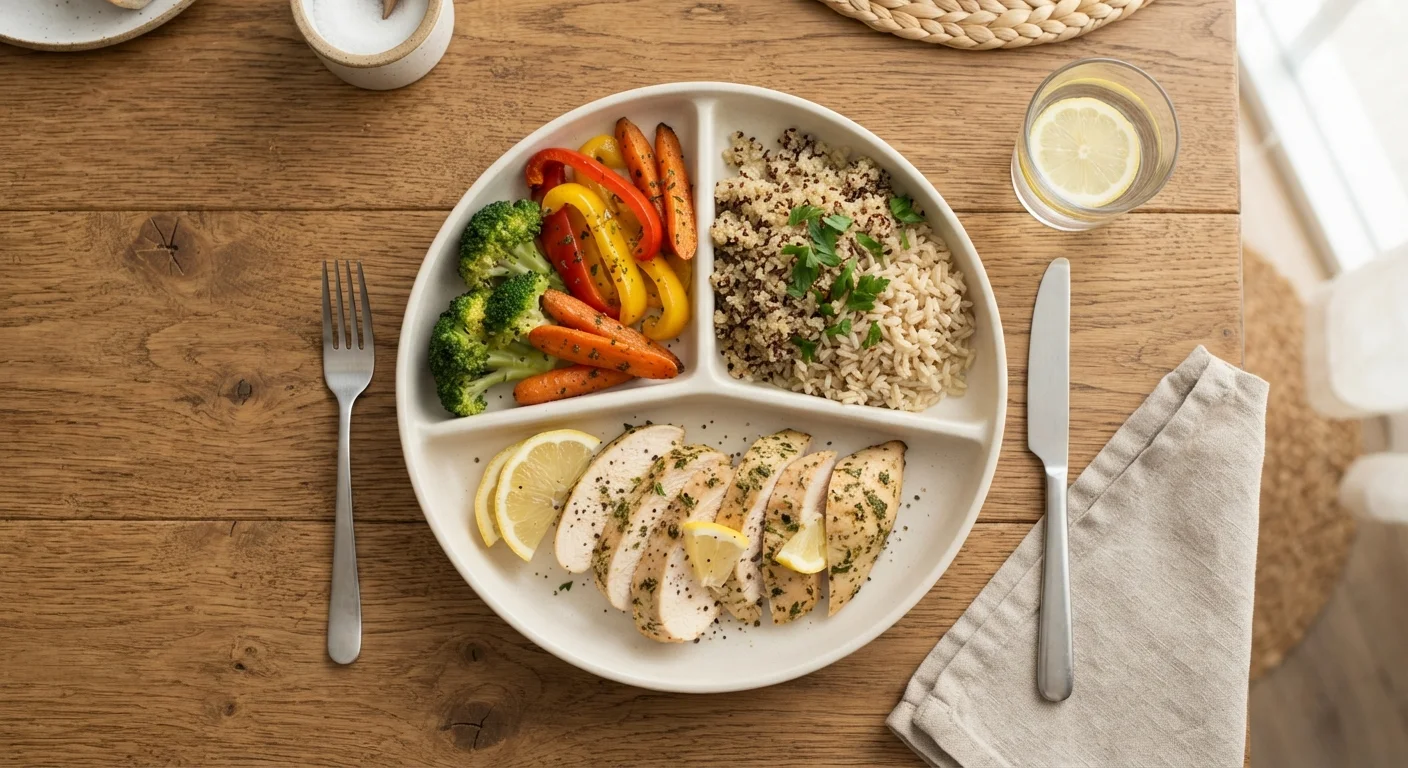
Photo: BridgeWish.com | Reliable Source Of Information editorial
Key Takeaways
- Portion size and serving size are different — only serving size appears on nutrition labels.
- Even healthy foods can contribute to energy imbalance when eaten in very large amounts.
- Visual hand-based guides offer a practical way to estimate portions without measuring tools.
- Restaurant and packaged food portions are often larger than standard serving sizes.
- Developing portion awareness is a skill, not a strict rule — flexibility matters.
The Gap Between Eating Well and Eating the Right Amount
Most nutrition conversations focus on what to eat — whole grains, vegetables, lean proteins. Far less attention goes to how much. Yet the amount of food on your plate plays a significant role in how your body responds to any meal, regardless of the quality of the ingredients.
This doesn't mean healthy foods are problematic. It means that nutrition is a two-variable equation: food quality and food quantity both matter. Someone eating exclusively nutritious food in very large amounts may still experience energy imbalance over time. Understanding portion size is one of the most practical — and most underrated — nutrition fundamentals there is.
If you've ever fallen into the trap of food rules that backfire, our piece on nutrition thinking that often backfires explores why oversimplified approaches to eating tend to fall short.
2–3x
How much restaurant portions have grown since the 1970s
Research published in nutrition journals has documented significant portion size increases across common restaurant dishes over several decades.
92%
Of food served is eaten when portions exceed needs
Studies in behavioral nutrition suggest people consume the majority of whatever is placed in front of them, regardless of actual hunger level.
~30%
More calories consumed with larger plate sizes
Controlled studies have found that plate diameter influences how much people serve themselves and ultimately eat, independent of appetite.
Portion Distortion: How Our Sense of 'Normal' Gets Skewed
Over recent decades, standard food portions in restaurants, packaged goods, and even home cooking have grown considerably. When large amounts become the daily norm, our internal sense of an appropriate quantity quietly recalibrates upward — a well-documented phenomenon known as portion distortion.
This matters because hunger and fullness signals, while real, can be overridden by visual and environmental cues. Research in behavioral nutrition has shown that people consistently eat more when given larger plates, bigger serving bowls, or more food in front of them — often without noticing. The environment shapes the portion before appetite does.
“We don't just eat with our stomachs — we eat with our eyes. The amount of food in front of us powerfully shapes how much we consume, often independently of hunger.”
— Brian Wansink, Former food psychology researcher and author of studies on environmental eating cues
For a closer look at how everyday eating patterns are influenced by these dynamics, the companion article on portion distortion goes deeper on the psychology involved.
Practical Ways to Develop Portion Awareness
You don't need a food scale to build better portion intuition. The most effective approaches use everyday reference points that travel with you into any kitchen or restaurant.
The Hand Method
- Protein (meat, fish, tofu): roughly the size and thickness of your palm
- Grains and starches (rice, pasta, bread): a cupped handful
- Fats (oils, nut butters, cheese): your thumb from tip to base
- Vegetables: two cupped handfuls — and most people benefit from more, not less
The Plate Method
A reliable visual framework: fill half the plate with non-starchy vegetables, one quarter with a protein source, and one quarter with a grain or starchy vegetable. This naturally structures portions without requiring measurement. Our article on what a balanced plate actually looks like walks through this in detail.
Start With One Meal, Not Every Meal
These methods are also budget-compatible — understanding portions helps you shop more efficiently. Eating nutritiously on a budget becomes more manageable when you have a clearer sense of how much of each food type you actually need.
What This Looks Like in Everyday Eating
Portion awareness becomes most useful when applied to real situations: restaurant meals that arrive on oversized plates, packaged snacks where the listed serving is half the bag, or home cooking where portions grow gradually over time without notice.
The aim isn't rigidity. It's calibration — developing a realistic internal reference for what an adequate amount feels like, so that decisions become intuitive rather than stressful. Checking nutrition labels is a useful supporting habit: the serving size listed affects every number on the label, so knowing how your portion compares is important context. See our nutrition label guide for practical help there.
This article is for general informational purposes only and is not a substitute for personalized advice from a registered dietitian or qualified healthcare professional.
Frequently Asked Questions
The content on this site is for informational purposes only and is not a substitute for professional advice. Always consult a qualified professional for guidance specific to your situation.